Welcome To Contact Us
Response Within 24 hours Guaranteed | Low MOQ from 50 pcs
🔒 100% Privacy Protected. No Spam Guaranteed.

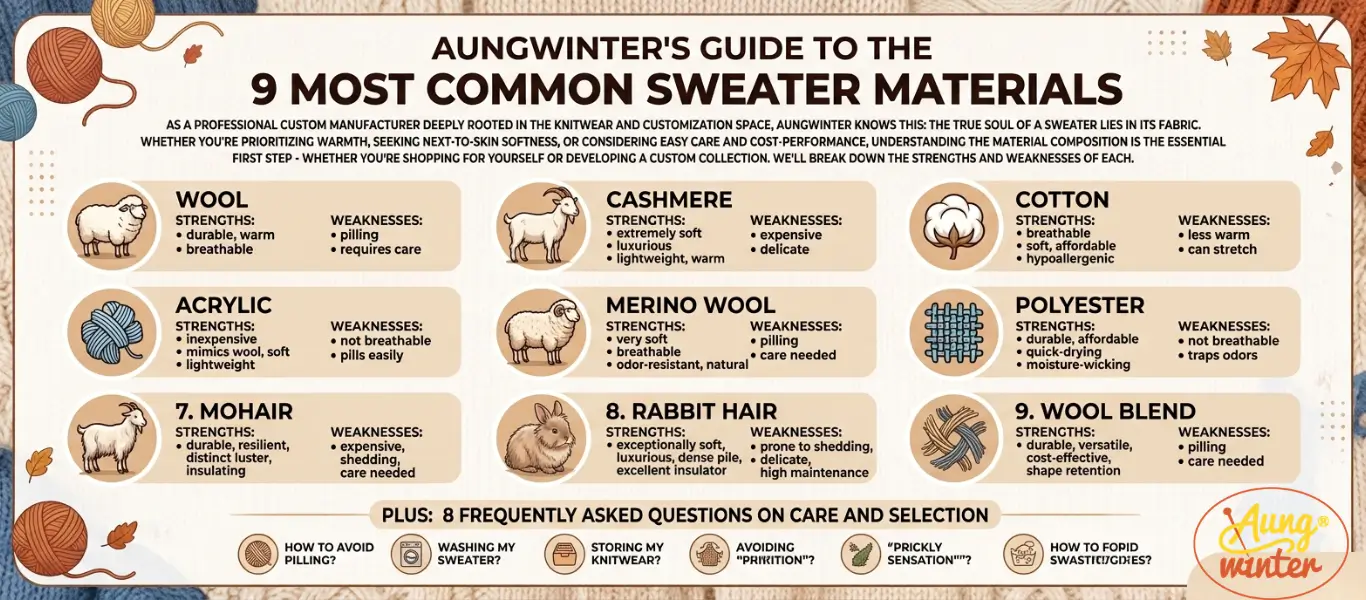
As a professional custom manufacturer deeply rooted in the knitwear and customization space, Aungwinter knows this: the true soul of a sweater lies in its fabric. Whether you’re prioritizing warmth, seeking next‑to‑skin softness, or considering easy care and cost‑performance, understanding the material composition is the essential first step – whether you’re shopping for yourself or developing a custom collection.
To help you make clear, confident decisions this fall and winter, Aungwinter has compiled a guide to the 9 most common sweater materials on the market today. We’ll break down the strengths and weaknesses of each, and also include 8 frequently asked questions on care and selection – so you can choose wisely and care properly.Prickly sensation
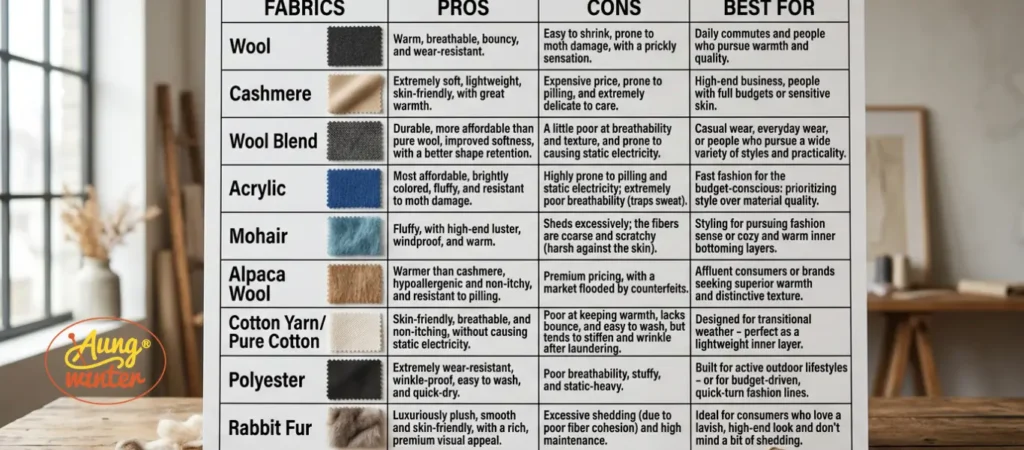
| FABRICS | PROS | CONS | BEST FOR |
| Wool | Warm, breathable, bouncy, and wear-resistant. | Easy to shrink, prone to moth damage, with a prickly sensation. | Daily commutes and people who pursue warmth and quality. |
| Cashmere | Extremely soft, lightweight, skin-friendly, with great warmth. | Expensive price, prone to pilling, and extremely delicate to care. | High-end business, people with full budgets or sensitive skin. |
| Wool Blend | Durable, more affordable than pure wool, improved softness, with a better shape retention. | A little poor at breathability and texture, and prone to causing static electricity. | Casual wear, everyday wear, or people who pursue a wide variety of styles and practicality. |
| Acrylic | Most affordable, brightly colored, fluffy, and resistant to moth damage. | Highly prone to pilling and static electricity; extremely poor breathability (traps sweat). | Fast fashion for the budget-conscious: prioritizing style over material quality. |
| Mohair | Fluffy, with high-end luster, windproof, and warm. | Sheds excessively; the fibers are coarse and scratchy (harsh against the skin). | Styling for pursuing fashion sense or cozy and warm inner bottoming layers. |
| Alpaca Wool | Warmer than cashmere, hypoallergenic and non-itchy, and resistant to pilling. | Premium pricing, with a market flooded by counterfeits. | Affluent consumers or brands seeking superior warmth and distinctive texture. |
| Cotton Yarn/Pure Cotton | Skin-friendly, breathable, and non-itching, without causing static electricity. | Poor at keeping warmth, lacks bounce, and easy to wash, but tends to stiffen and wrinkle after laundering. | Designed for transitional weather – perfect as a lightweight inner layer. |
| Polyester | Extremely wear-resistant, winkle-proof, easy to wash, and quick-dry. | Poor breathability, stuffy, and static‑heavy. | Built for active outdoor lifestyles – or for budget‑driven, quick‑turn fashion lines. |
| Rabbit Fur | Luxuriously plush, smooth and skin‑friendly, with a rich, premium visual appeal. | Excessive shedding (due to poor fiber cohesion) and high maintenance. | Ideal for consumers who love a lavish, high‑end look and don’t mind a bit of shedding. |

Pros: Wool’s natural crimp works as a built-in insulator, which can keep you warm and pulls moisture away so you stay comfortable. The fabric is soft, plush, and springy, and with a little care, a good wool sweater can stay in your rotation for years.
Cons: Machine washing often leads to shrinkage and distortion. Wool needs careful handling – dry cleaning or gentle hand‑washing is recommended, along with flat drying. Moths can also be a problem.
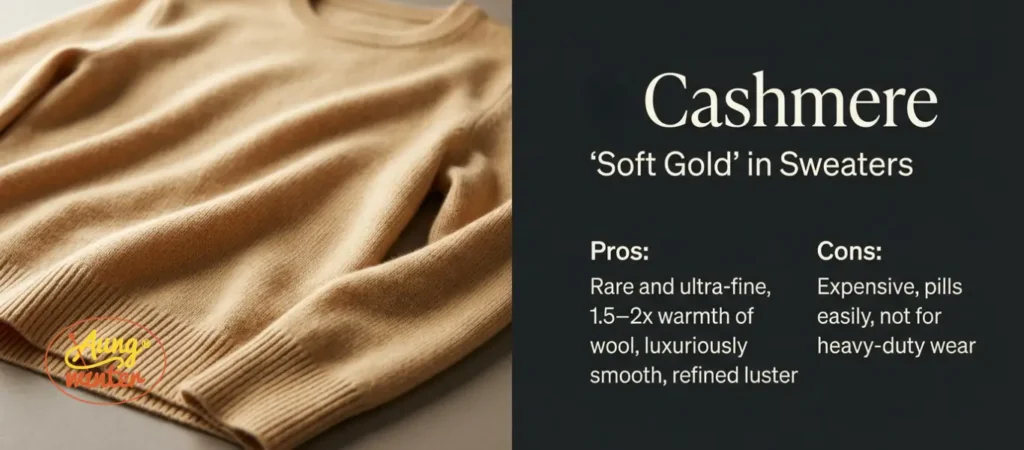
Pros: Rare and ultra‑fine, cashmere delivers 1.5–2x the warmth of wool at a fraction of the weight. It’s luxuriously smooth against the skin – no itch – with a refined, natural luster.
Cons: Expensive and high‑maintenance. It pills easily with friction and demands careful handling – not a good choice for heavy‑duty or active wear.
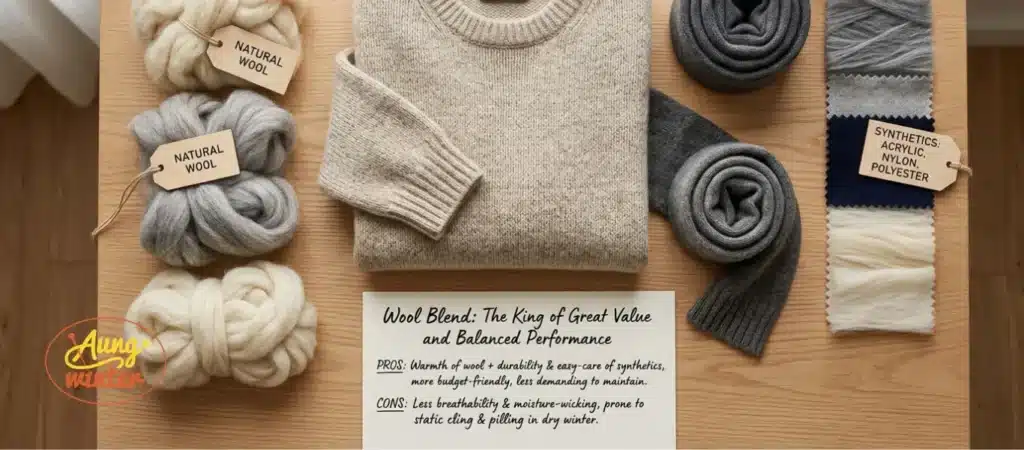
Pros: Wool blends combine the best of both worlds – you get the warmth of wool, plus the durability and easy‑care benefits of synthetic fibers like acrylic, nylon, or polyester. They’re more budget‑friendly than pure wool and much less demanding to maintain.
Cons: The trade‑off? More synthetics mean less breathability and moisture‑wicking performance. It’s a big problem that wool blend easily causes static cling and pilling in dry winter.
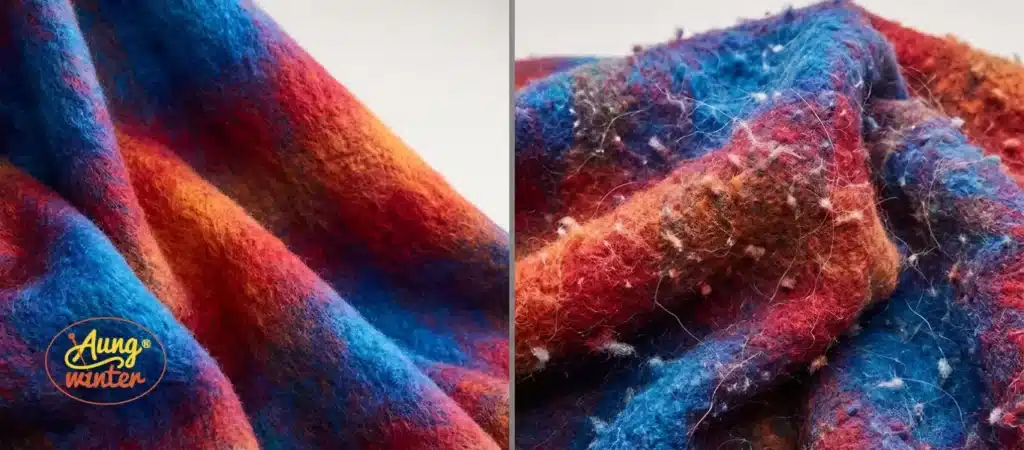
Pros: Acrylic has a fluffy, wool‑like feel and holds bright, fade‑resistant colors beautifully. It’s not on the menu for moths, and it’s cheap, which is why it’s the backbone of most sweaters priced under 100 RMB/14$.
Cons: Acrylic has limited breathability and negligible moisture absorption, resulting in a stuffy, uncomfortable wearing experience. It also generates significant static buildup and offers poor abrasion resistance – leading to pronounced pilling after only a few wears.
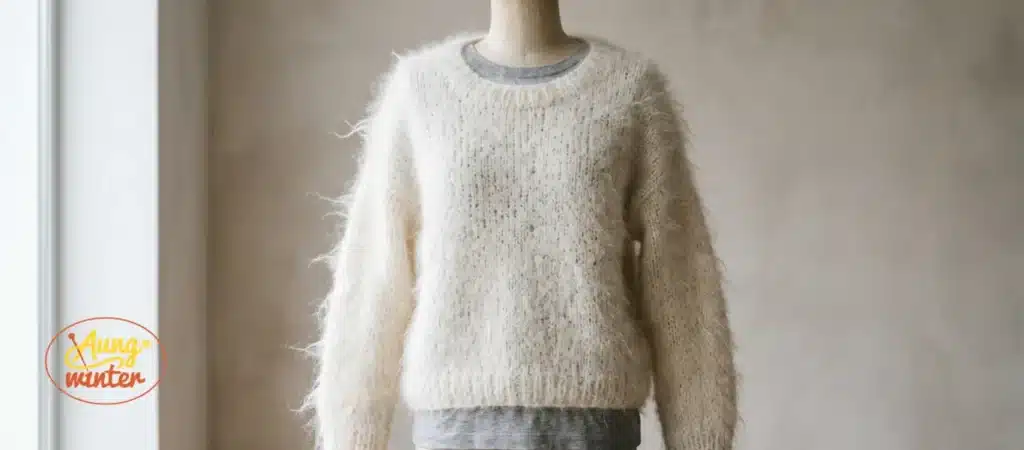
Pros: Came from Angora goats, mohair has long, coarse fibers that create a beautifully fluffy halo with a gentle, silky luster. It blocks the wind, keeps you warm, and doesn’t pill easily – all of which makes it a favorite for romantic, statement‑making knitwear.
Cons: The flip side? It sheds – and it sheds a lot. You’ll find fibers on everything. Please note that the coarse texture means it can feel scratchy against bare skin, so it’s best worn over a long‑sleeve layer.
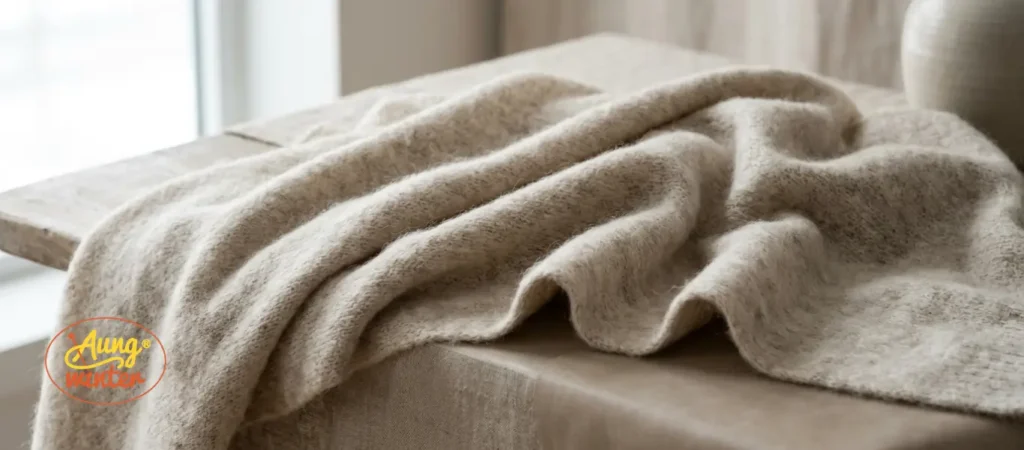
Pros: Alpaca fiber is naturally hollow – which means it traps heat better than cashmere. It’s also free of lanolin, so it won’t irritate your skin – a huge plus for sensitive types. The texture is smooth, and it resists pilling and shrinking better than its cashmere counterpart.
Cons: Here’s the catch – high‑quality, long‑fiber alpaca is rare and expensive. And the market is crowded with impostors using cheap wool scraps to pass off as the real thing, making it a tough call for the average shopper.
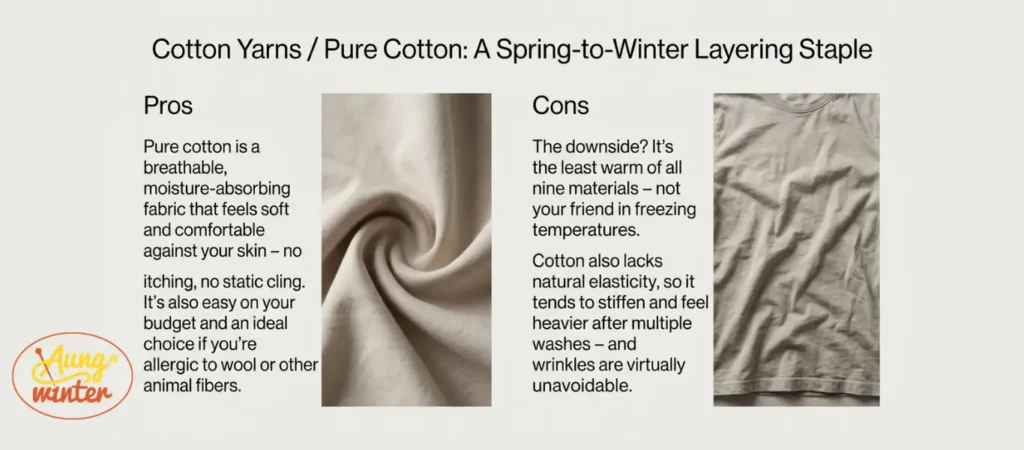
Pros: Pure cotton is a breathable, moisture‑absorbing fabric that feels soft and comfortable against your skin – no itching, no static cling. It’s also easy on your budget and an ideal choice if you’re allergic to wool or other animal fibers.
Cons: The downside? It’s the least warm of all nine materials – not your friend in freezing temperatures. Cotton also lacks natural elasticity, so it tends to stiffen and feel heavier after multiple washes – and wrinkles are virtually unavoidable.
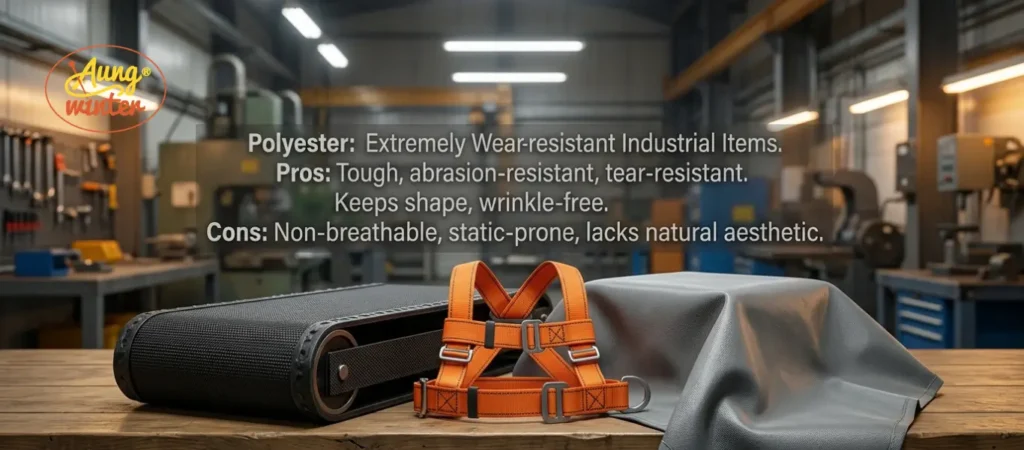
Pros: Polyester is tough, abrasion‑resistant, and tear‑resistant. It keeps its shape beautifully – wrinkles fall out fast, no matter how much you scrunch it.
Cons: As a sweater fabric, polyester offers the poorest wearing experience. It’s completely non‑breathable, so sweat will leave you feeling cold and clammy against the skin. In addition, polyester generates heavy static and lacks the natural, premium aesthetic of real fibers.
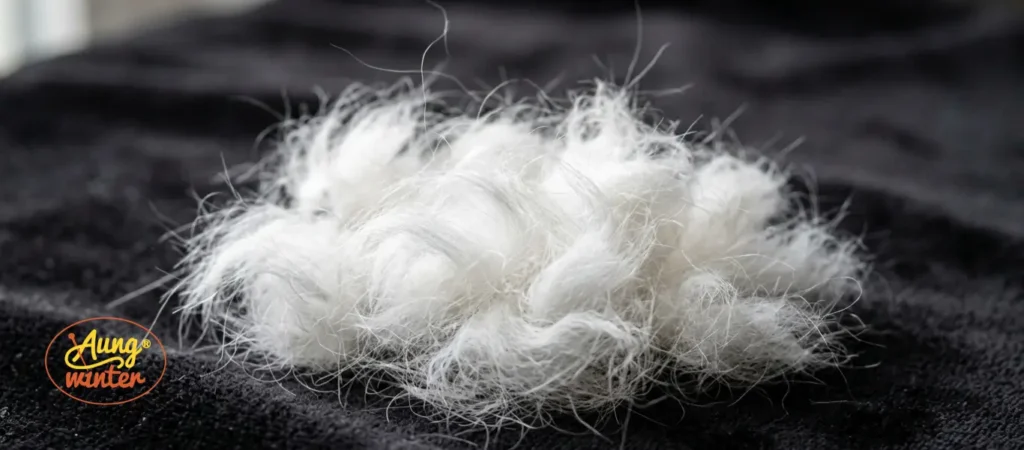
Pros: Rabbit hair features a dense, long surface fuzz that delivers an exceptionally smooth, silky handfeel. It offers strong warmth retention and a lavish, opulent appearance – making it a popular choice for high‑end women’s knitwear.
Cons: The fatal flaw? Rabbit hair fibers are so smooth that they have poor cohesion – resulting in excessive shedding. (It’s even been dubbed the “walking dandelion” of the fiber world.) It also requires extremely delicate care and storage.
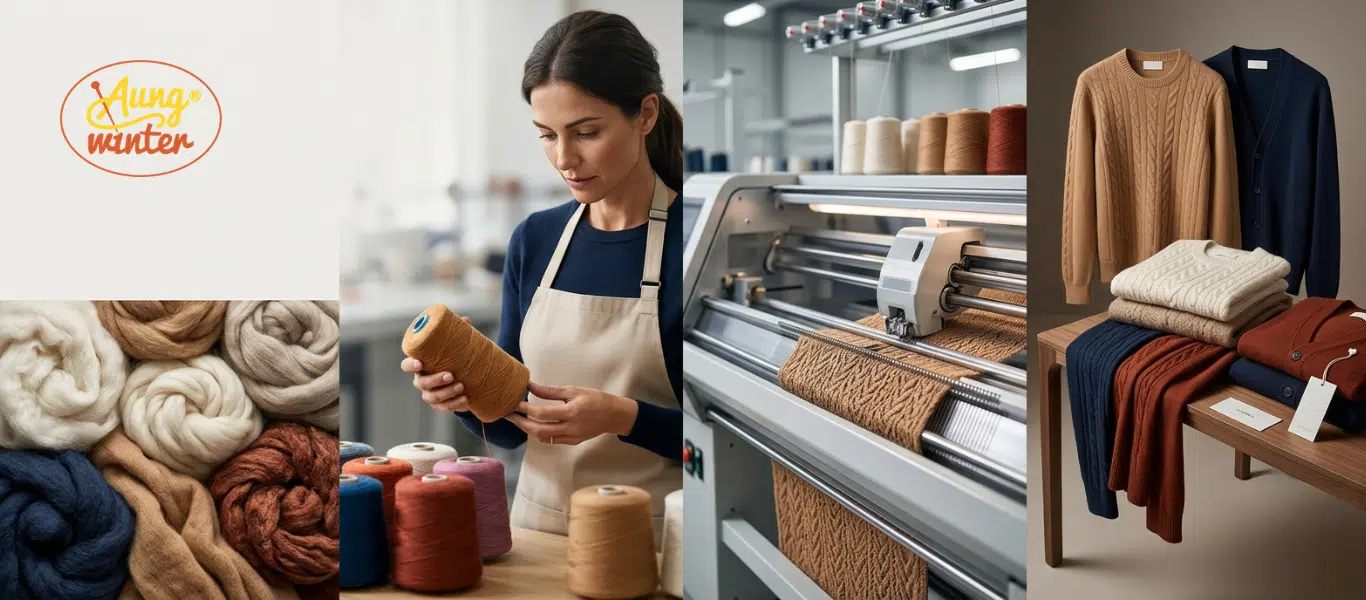
It all starts with the material.
Whether you’re building a luxury knitwear collection or looking for custom winter sweaters, the fiber you choose sets the stage for everything else – and it’s the first step toward making something your customers will genuinely love.
Aungwinter provides professional sweater manufacturing solutions from yarn selection to finished production.
A: To be honest, it depends on what your demands are. Cashmere can provide you with ultra-soft, lightweight warmth – but you’ll pay a premium for that. Wool is the practical choice if you want durability, steady warmth, and great value for everyday use. Pick the one that fits your lifestyle.
A: Not at all – pilling is actually a natural side effect of friction. Soft, fine natural fibers like wool and cashmere are especially prone to it in areas that rub a lot, such as sleeves and underarms. It’s just the nature of the fiber, not a sign of poor quality. If your acrylic sweater pills, that’s also down to the material itself. The fix? Use a pill shaver – never pick them off with your fingers.
A: It’s down to fiber thickness. Thicker fibers – think standard wool or mohair – have rough scales that can really bother your skin.
What to do about it: When shopping, look for finer fibers like merino, cashmere, alpaca, or cotton – they’re your best options. And if you already have a sweater that feels scratchy, simply wear a long‑sleeve cotton tee underneath as a comfortable layer. Problem solved.
A: Follow these 3 golden rules: cold, gentle, and flat.
Use water below 30°C/86℉ – hot water is a no‑go.
Use a detergent made for wool or cashmere, and gently press the sweater in the water – never scrub, twist, or wring it out.
After washing, pat it dry with a towel, then lay it flat, never hang it, or it’ll stretch; never tumble‑dry it, or it’ll shrink to doll size.
A: Let’s be honest – because of the way these fibers are (super smooth and not very clingy), shedding is part of the package. You can’t get rid of it entirely.
But you can calm it down a bit: Pop your new sweater in a sealed bag and freeze it for 24 hours – it can help reduce shedding by making the fibers a bit more resilient. And when you wear it, stay away from dark wool coats or corduroy – they’re magnets for stray fluff.
A: The worst culprits are synthetic fibers – acrylic and polyester are the main offenders. These fabrics rub together and leave you zapping everything you touch in dry winter.
What you can do: Go for natural fibers – cotton, wool, or cashmere are your best friends here. And here’s a bonus tip: a little fabric softener in the wash goes a long way in keeping static under control.
A: Pure cotton is your safest bet -it’s super gentle and won’t irritate your skin at all. If you still prefer something warm, try pure alpaca. It’s naturally lanolin-free, hypoallergenic, and soft – a great pick for sensitive wearers.
A: First, wash and thoroughly dry them. Even a single wear leaves behind sweat and skin cells that can draw moths.
How to store: Fold them flat – no hanging. Toss in some moth repellent (cedar blocks or mothballs work well), and keep the storage area nice and dry.
From Fiber to Fit: Aungwinter Sweater Selection Guide
Sweater Materials & Difference Between Sweaters, Sweatshirts, and Knitwear