Welcome To Contact Us
Response Within 24 hours Guaranteed | Low MOQ from 50 pcs
🔒 100% Privacy Protected. No Spam Guaranteed.

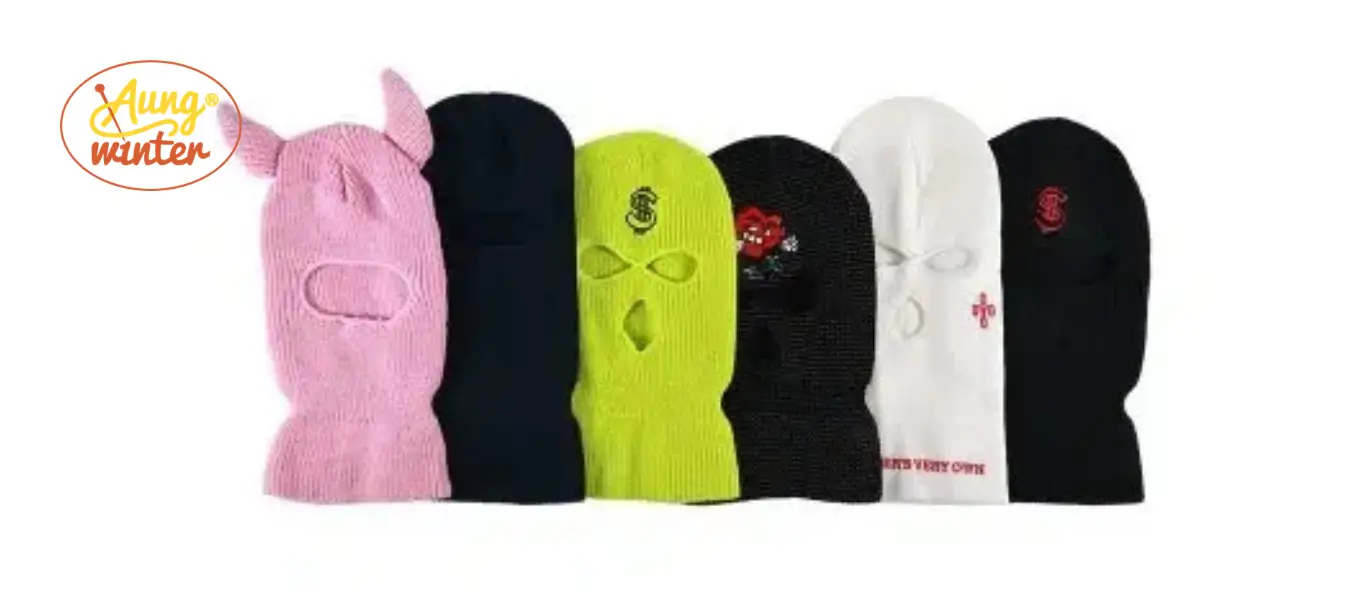
More Than Just a Ski Mask – The All‑Rounder That Outperforms Its Original Purpose
The ski mask – known in many parts of the world as a balaclava – has undergone a remarkable transformation. Evolving from a 19th‑century military headgear into a versatile accessory that now spans winter sports, urban fashion, tactical applications, and beyond, it has become a true cross‑category essential. As a specialized custom winter hat manufacturer, we at Aungwinter have witnessed this evolution firsthand and believe the ski mask represents one of the most compelling growth opportunities in today’s winter accessory market.
In 2024, the global ski mask market scale was about $1.2 billion, and it’s predicted to reach $2.1 billion in 2033, with a stable annual compound growth rate of 6.2%. Here is a forecast from another industry analysis that there is a great possibility that the global ski mask market will reach $3.1 billion in 2034, reflecting an even more optimistic growth trajectory. This expansion is fueled by rising participation in winter sports, growing consumer awareness of cold-weather protection, and the ski mask’s increasing crossover into fashion and lifestyle categories.
For B2B buyers – whether you’re a retail brand, a promotional products distributor, or an e-commerce entrepreneur – a thorough understanding of ski mask design details, material selection, and customization options is key to capturing value in this growing market. Drawing on our manufacturing experience, this article offers a comprehensive, panoramic overview of the ski mask market, along with practical, actionable recommendations for purchasing managers and brand owners alike.
It’s often heard that “ski mask” and “balaclava” are used as if they mean the same thing – and in many cases, they are. But if you look at it from a product design perspective, there’s a slight difference. A classic balaclava covers the whole head and neck, with only the eyes, nose, and mouth showing. A ski mask, on the other hand, typically covers just the face. That said, in the U.S., most people use “ski mask” to mean a balaclava anyway, and the two terms are generally understood as interchangeable.
More importantly, the ski mask family covers a wide range of styles – each designed for different climates, uses, and performance needs.
In ski mask manufacturing, the opening hole design is one of the most critical decisions you’ll make:
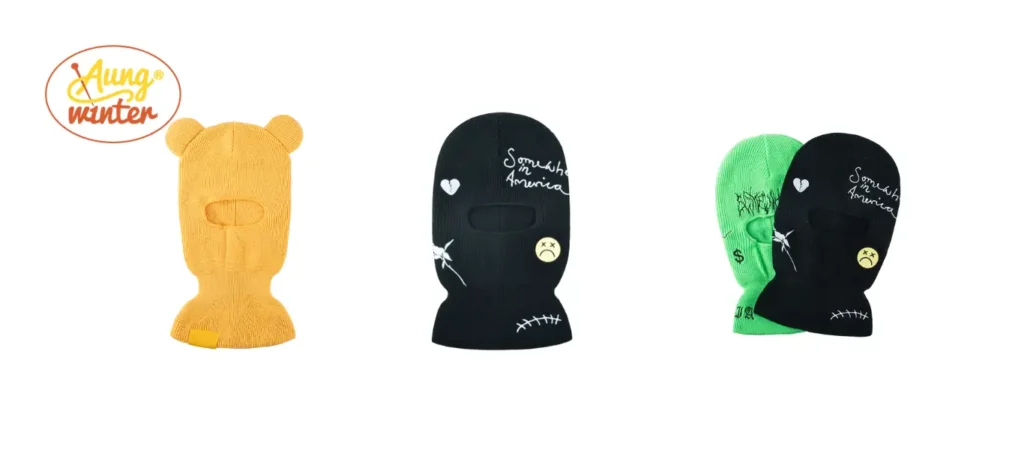
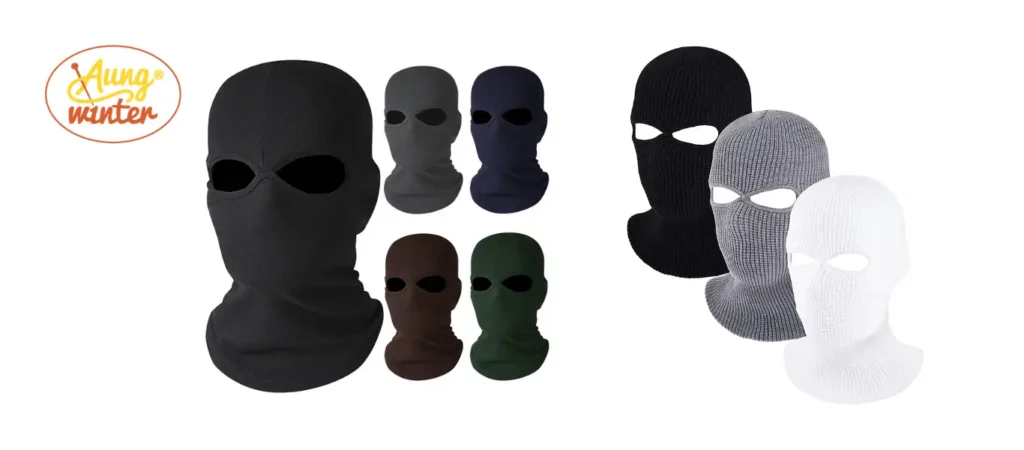
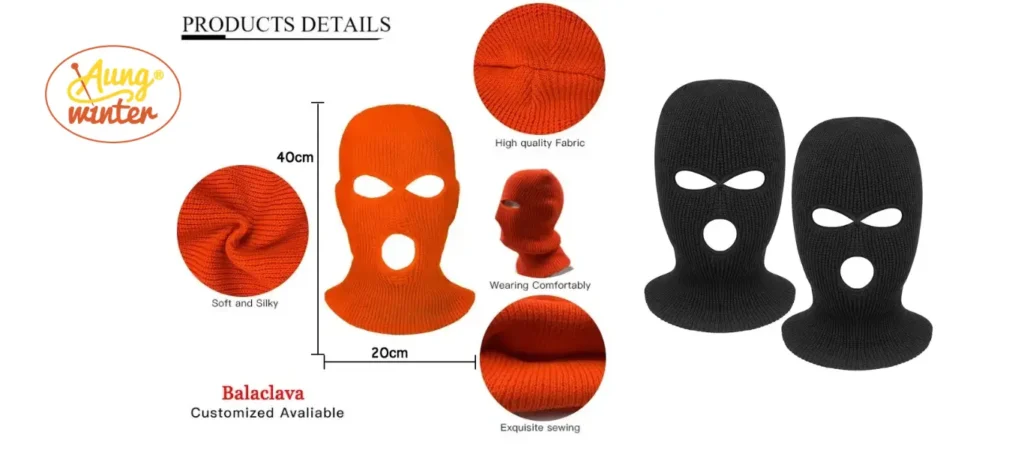
From a B2B perspective, offering a variety of opening configurations – whether labeled as one‑hole, two‑hole, or three‑hole – allows you to serve distinct end‑user segments, from style‑conscious consumers to performance‑oriented athletes.
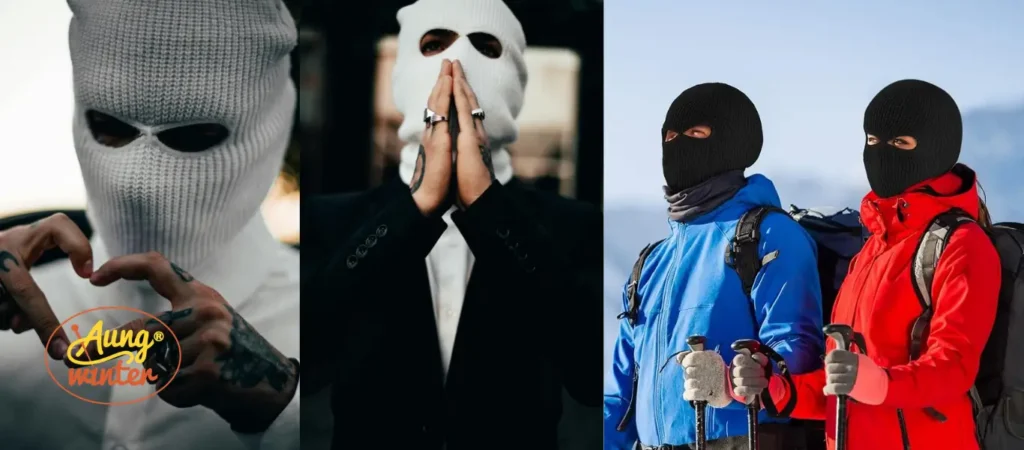
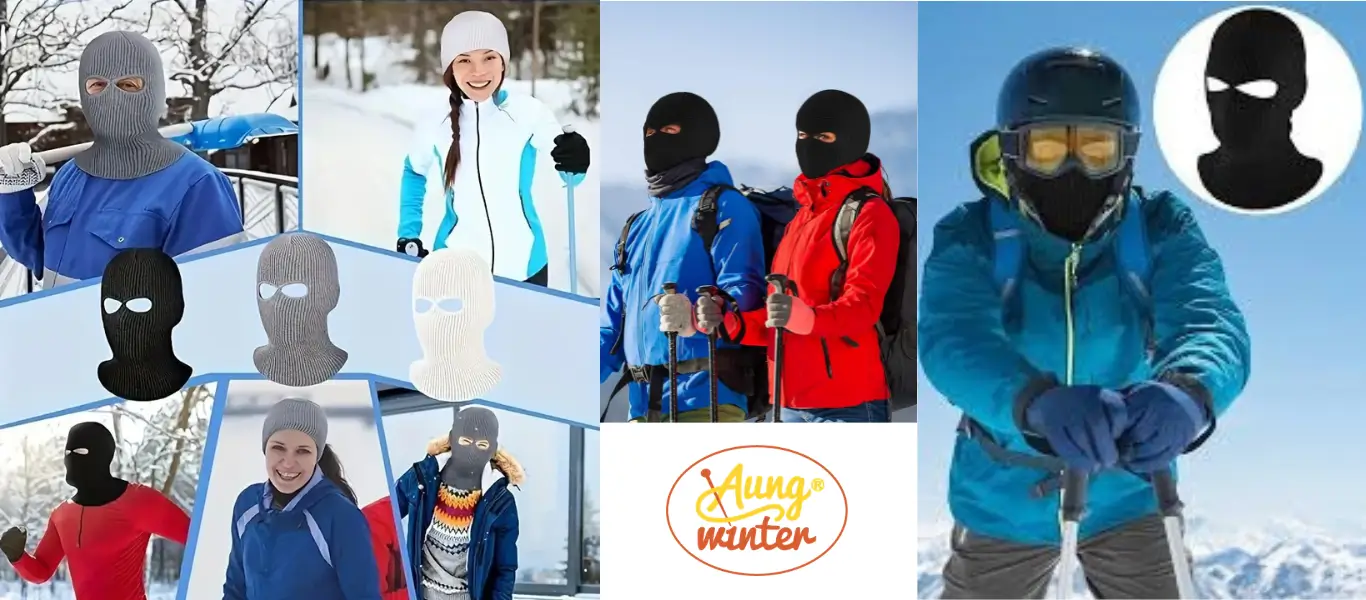
While skiing and snowboarding remain the core application areas for ski masks, the market has diversified significantly in recent years. Today, ski masks are finding use across a wide range of scenarios:
This diversification trend opens up significant opportunities for B2B buyers to position ski masks across multiple product categories and consumer segments – from performance‑driven outdoor enthusiasts to style‑conscious urban consumers and industrial users.
At Aungwinter, we believe that material selection is the single most critical decision in ski mask manufacturing. The right material determines warmth, breathability, durability, comfort, and cost – all factors that directly impact your brand’s reputation and customer satisfaction.
Below is our breakdown of common ski mask materials:
| Fabrics | Key Features | Best for |
| Acrylic Fabric | Warm, lightweight, soft, and bouncy Also called synthetic wool | Budget‑friendly warmth, Oeko‑Tex certified options |
| Polyester | Lightweight, breathable, quick-dry, and durable | High‑intensity activities, budget‑friendly options, easy‑care products |
| Merino Wool | Natural warmth, excellent moisture‑wicking, odor‑resistant, stays warm even when damp, soft against skin | High-end, functional products |
| Fleece | Warm and soft, suitable for cold weather and areas | Choices for lining and extremely cold environments |
| Spandex | With excellent bounce, not easy to deform, moisture-wicking | For tight and functional designs |
| Nylon | Lightweight, durable, and waterproof | Best for windproof and snow-proof designs |
| Cotton | Soft and cozy | Great for a tender climate and casual wear |
A key distinction in ski mask manufacturing lies in the choice between knitted and woven construction:
Therefore, understanding this distinction is key. Here are the differences in the sheet below.
| Aspect | Knitted | Woven |
| Primary materials | Acrylic, wool blends | Polyester, nylon, spandex |
| Key features | Warmth, stretch, softness | Wind resistance, UV protection, lightweight |
| Best for | Casual winter wear, lifestyle use | Sports, high intensity activities, tactical use |
| Comfort | Soft, flexible | Lightweight, breathable |
| Performance | Good insulation | Superior moisture management and protection |
In short: knitted masks excel in warmth and comfort, while woven masks offer greater performance and protection – and your choice should be guided by your customers’ primary use scenarios.
The ski mask market is benefiting from continuous material innovation. Material technology is moving fast. The latest industry research points to a clear trend: fabrics are getting lighter, more breathable, and better performing – which translates directly to improved comfort for the wearer.
Key innovations we are monitoring include:
For B2B buyers, specifying advanced materials is a powerful way to differentiate your brand in an increasingly competitive market, while also adding tangible value to your product offering.
Here’s the reality: off‑the‑shelf products just don’t cut it anymore. They rarely command premium prices or build real brand loyalty. But customization – whether it’s a unique logo, a distinctive color, an exclusive pattern, or custom packaging – allows B2B buyers, brands, and retailers to create products that feel personal and resonate with their audience on a deeper level. At Aungwinter, we offer comprehensive customization across the whole process from an idea to your door. This end‑to‑end customization capability is essential for brands looking to establish a distinct market position.
Logo application is one of the most impactful parts of customization – and the right technique depends on what you’re making, your budget, and the look you’re after:
If you’re working with woven ski masks, printing is the most practical and popular choice for logos and patterns. For knitted balaclavas, embroidery is the way to go – it lasts longer and feels more premium.
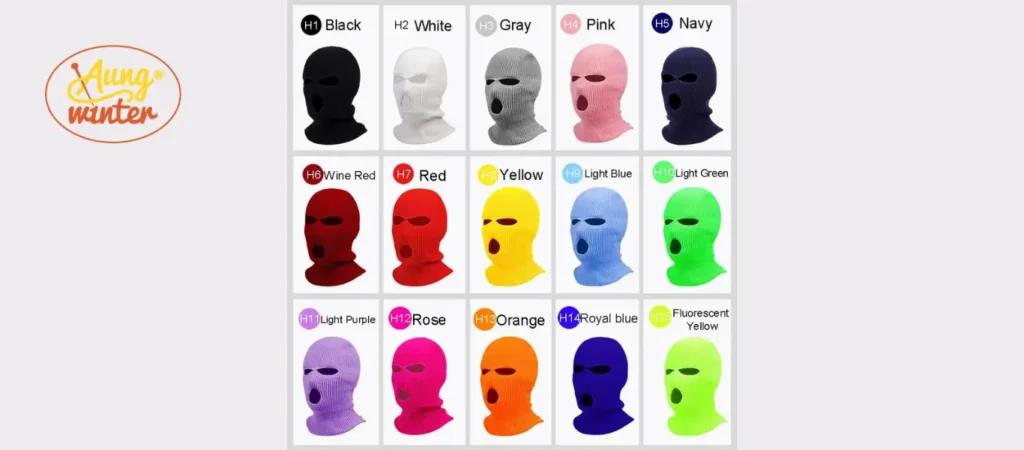
Color is a powerful brand recognition element. We’ve got a wide spectrum of colors to choose from – think classic staples like black, gray, and navy, or go bold with red, blue, and even neon. Need something unique? No problem – we offer custom color matching to get your shade exactly right.
Market research indicates that neutral tones remain the most popular choice in custom orders. However, demand for more distinctive, vibrant colors is on the rise – as they help products stand out both on physical shelves and in online listings.
The proper fit is essential for both comfort and performance. We offer a wide range of size options, from small to plus sizes, ensuring your products can accommodate a variety of body types and head circumferences.
For B2B buyers, offering a well‑considered size range is not just a customer service consideration; and it’s a competitive advantage. A good fit reduces returns, increases customer satisfaction, and builds brand trust over the long term.
MOQ is one of the most critical considerations for B2B buyers. Different manufacturers offer different MOQ structures based on their production capabilities and business models.
At Aungwinter, our MOQ system is designed to serve businesses of all sizes:
Therefore, it’s very friendly for startups and smaller sellers to test the market with small batches and scale up as demand grows. However, different manufacturers have different MOQs; some custom manufacturers in the market offer MOQs as low as 10 pieces in full custom, while others require 300 pieces or more.
Quality assurance is a non-negotiable priority in supplier selection or sourcing. When evaluating potential manufacturing partners, please consider the following :
Understanding production timelines is essential for inventory planning. Typical lead times vary significantly based on order complexity:
| Order Type | Typical Lead Time |
| Fully custom ski masks | 30–45 days |
| Logo customization on existing designs | 2–15 days |
| Wholesale blank products | As short as 2–7 days |
China’s key manufacturing hubs – including Fujian, Shenzhen, Guangzhou, and Zhejiang – come with built‑in advantages: a dense web of suppliers and close proximity to major shipping ports. This can shave up to two weeks off material sourcing lead times. On the production side, automated knitting systems in these areas are highly efficient – capable of producing 5,000 to 10,000 pieces per line per day, and sometimes even more – which means large orders can be turned around fast.
The unit price for custom ski masks typically ranges from $2.50 to $8.00 per piece based on our experience, including logo and pattern customization. However, the final price depends on several factors:
One more thing to keep in mind: most manufacturers charge setup fees for embroidery or printing plates – typically $30 to $50 per design. So when you’re putting together your sourcing budget, don’t forget to leave room for these one‑time costs.
Based on both value and unit sales, North America remains the dominant force in the global ski mask market, via its mature winter sports ecosystem, a well‑developed resort infrastructure, and relatively high disposable incomes. Major brands such as The North Face, Columbia, and Burton, are the contribute to the innovation of ski masks. Europe follows as the second-largest market, via its historical skiing heritage and a strong culture of outdoor pursuits. Consumers in this region have a high level of awareness regarding performance features, which maintains consistent demand. This region shows a high level of awareness regarding performance features, which maintains consistent demand.
Asia‑Pacific is shaping up to be the market’s fastest‑growing region, with forecast growth above 8.5% annually through 2033. A major factor? Increased investment in winter sports facilities – especially following high‑profile events like the Winter Olympics – which has given the market a real boost across the region. The spread of online retail and younger generations’ growing exposure to Western outdoor trends are also speeding up regional adoption.
One of the biggest changes in the ski mask market? Not simply for staying warm, ski masks have crossed over into fashion, worn by skiers and motorcyclists for performance, but also showing up at music festivals and on city streets as a style statement.
What are the driving factors?
This means a new opportunity for B2B buyers, which is to position ski masks as lifestyle pieces, functional enough for winter sports, but stylish enough to wear all year round.
Sustainability has become a big deal in the ski mask market, and major brands are taking notice:
Going sustainable isn’t just about checking a box. It’s a way to differentiate your brand and earn the trust of consumers who care about where their gear comes from.
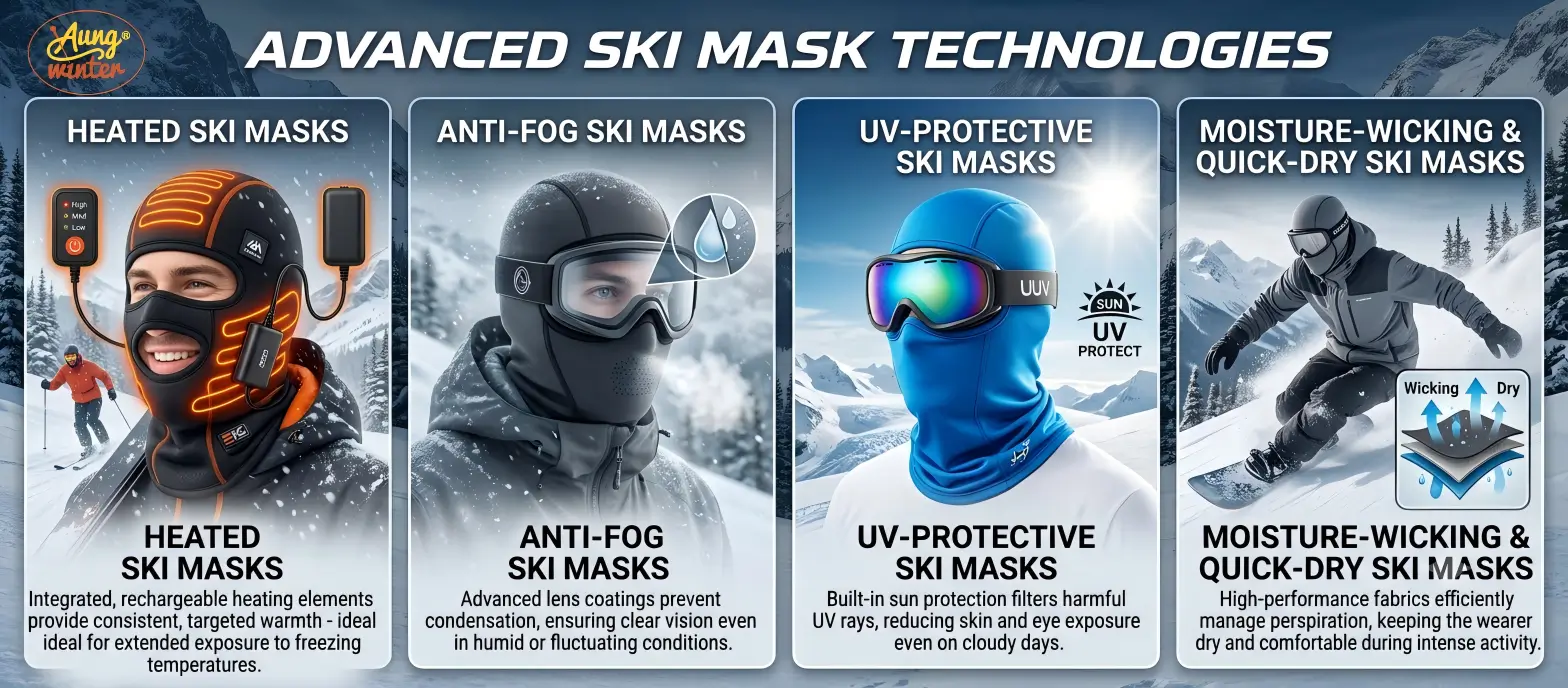
The ski mask market is seeing a wave of technological innovation. Here are some of the most impactful developments:
| Innovation | Benefit |
| Heated element | Long-lasting warmth in extreme cold |
| Anti-fog coating | Clear vision in all conditions |
| UV protection | Skin and eye safety |
| Moisture-wicking fabric | Comfort and dryness during high activity |
These advanced features are giving rise to new premium segments – with higher price points and healthier margins.
Before you even think about placing that first order, stop and ask yourself – who are you selling to, really? The following questions will help you get a clear picture of exactly who your audience is.
The answer will shape everything – from materials and design to pricing.
There’s always a trade‑off between cost and quality in manufacturing. Low‑cost products may seem attractive in the short term, but if they fail to perform or fall apart quickly, your brand reputation will take the hit, and that’s a much bigger cost to recover from.
A few practical steps:
In a market full of similar products, customization is what makes you different. Think about:
Seasonality is a fact of life in the ski mask market. Plan your ordering timeline accordingly:
Working with a dependable supplier that offers small MOQs takes the pressure off during peak seasons. You can adapt to changing demand quickly, without being locked into large stock commitments you might not need.
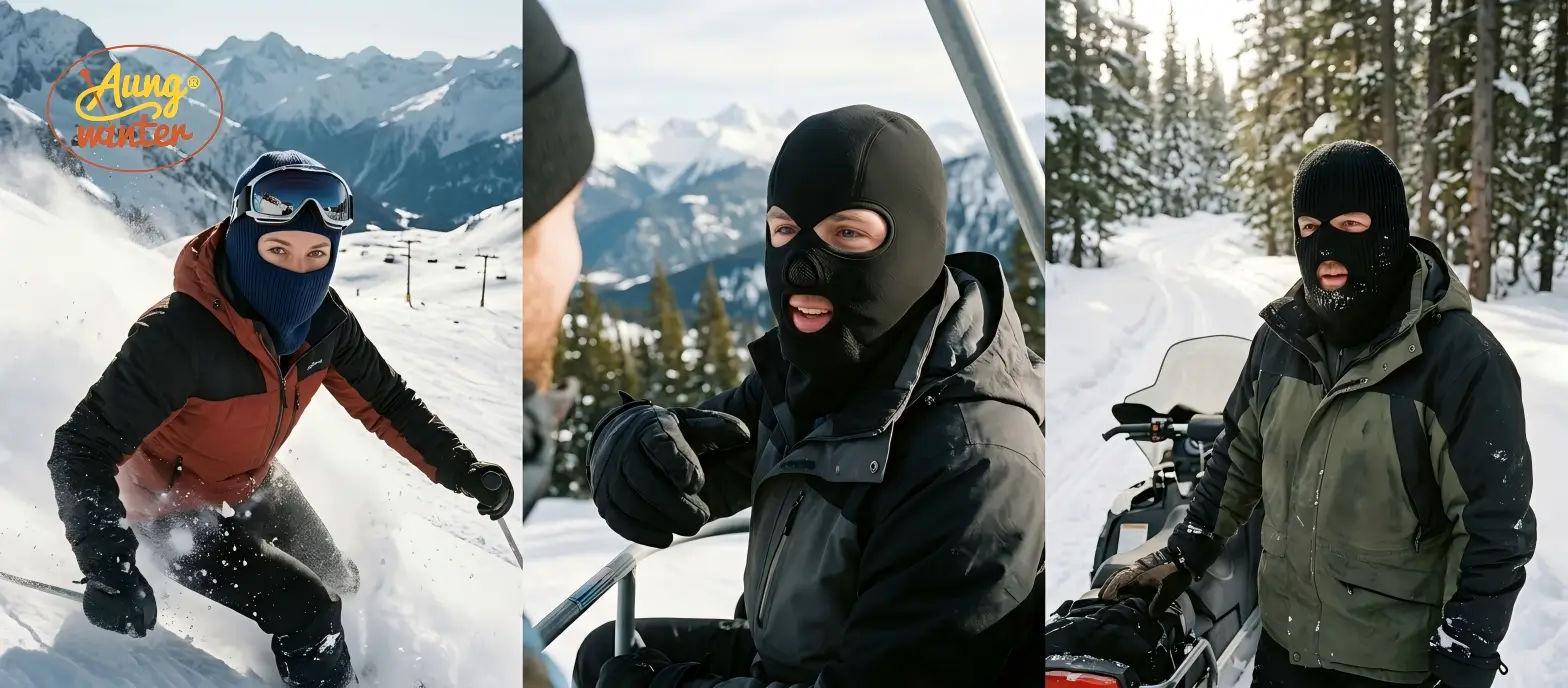
Here are significant opportunities for B2B buyers in the ski mask market – who understand its nuances and are willing to invest in quality, customization, and strategic partnerships. With more than 28 years of manufacturing experience, so no matter whether you’re launching a new brand, expanding an existing product line, or seeking a reliable private‑label manufacturing partner, we (Aungwinter) offer the customization capabilities, quality standards, and flexible MOQs you need to succeed.
Ready to turn your ski mask vision into real items? Contact our team today to discuss your requirements, sample demands, or start your custom order. Let’s create something exceptional together.
Answer: The choice comes down to what you’re optimizing for – warmth or performance.
| Feature | Knitted Balaclava | Woven Ski Mask |
| Typical material | Acrylic | Polyester + spandex |
| Key strengths | Warmth, softness, stretch | Breathability, light weight, protection |
| Best for | Casual winter wear | Sports, high-activity use |
Answer: Yes, logo customization is one of the most common services offered by ski mask manufacturers. At Aungwinter, we provide a range of logo application options to suit different product types and brand preferences:
Recommendation:
Answer: MOQ varies by manufacturer and order type. At Aungwinter, we offer the following structure: 50 pieces for both logo customization on existing designs and fully custom services (including custom materials, colors, and designs).
MOQs can vary a lot depending on the supplier. Some are happy to start with as few as 10 pieces for fully custom orders – others won’t even look at you unless you’re ordering 300 or more.
Before you commit, take a moment to think about your stock requirements, budget, and how much risk you’re comfortable with. A low MOQ is great for dipping your toe in the water – you can test the market without a huge upfront outlay. But if you’re ready to go bigger, higher volumes usually mean a better per-unit price, giving you more breathing room on margins.