Welcome To Contact Us
Response Within 24 hours Guaranteed | Low MOQ from 50 pcs
🔒 100% Privacy Protected. No Spam Guaranteed.

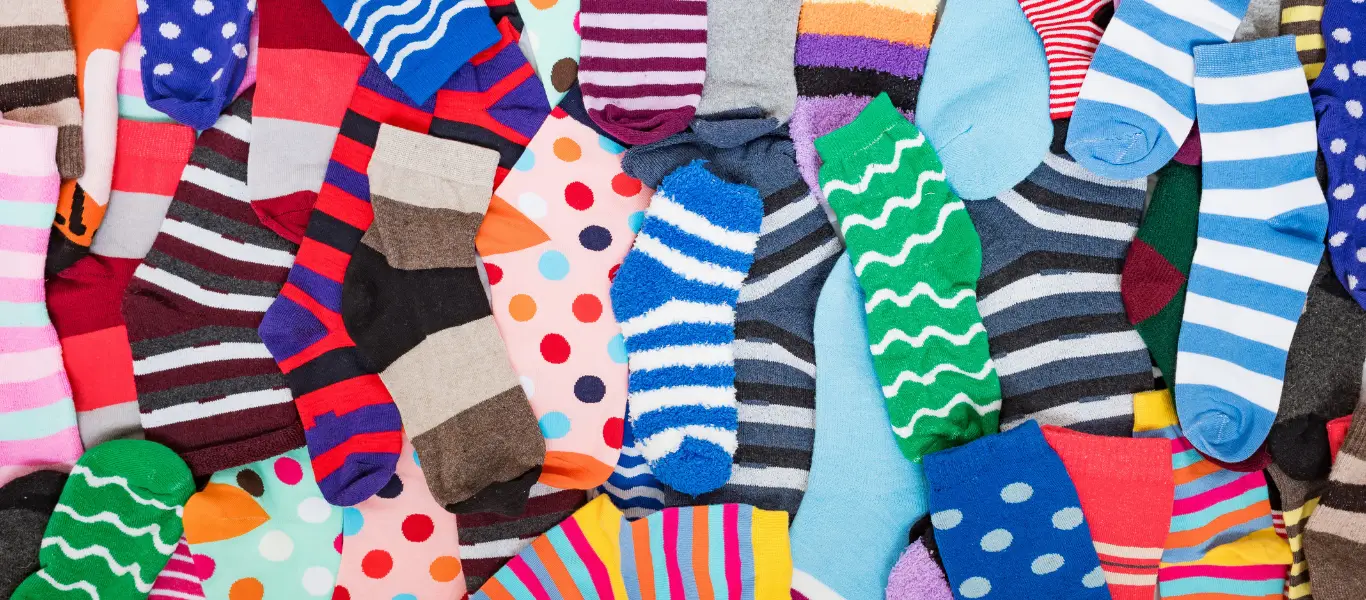
In daily life, we might ignore many details due to our busy lives. For example, do you know what socks are suitable for you with a comfortable wearing experience? Here, we, Aungwinter, a manufacturer of winter hats and accessories, will share socks made from different fabrics.
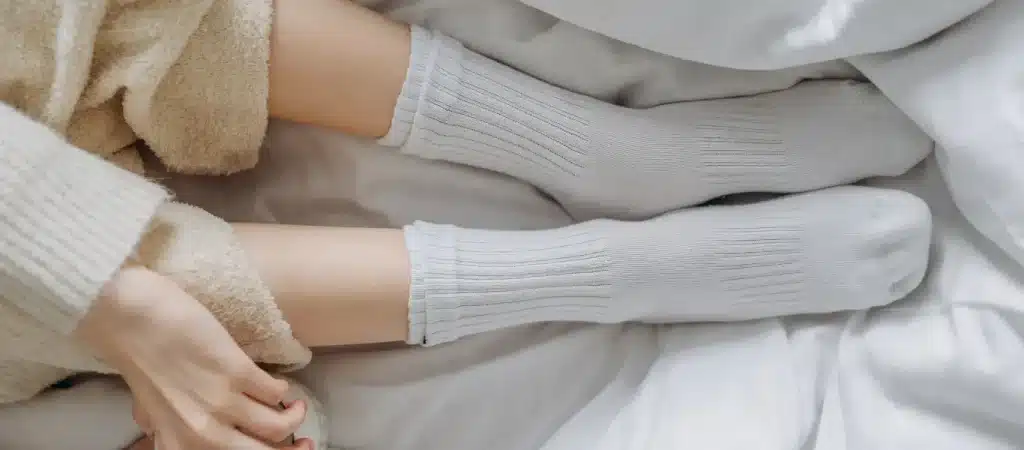
In general, we like to wear pure cotton socks that are moisture-wicking, heat-resistant, alkali-resistant, and hygienic. Moreover, pure cotton socks are not irritating without any side effects and won’t hurt the human body. But here is a question: Are pure cotton socks made of 100% cotton? The answer is no from professional sock makers. Socks composed of 100% cotton are not stretchy, with high shrinkage, and have no wear resistance. Usually, pure cotton socks are composed of more than 75% cotton with other functional fabrics. If the cotton proportion is over 85%, then these pure cotton socks are very high-end and cozy to wear. In general, cotton socks need to add some functional fabric to maintain the elasticity, durability, and comfort, such as spandex, nylon, polyester, etc.
Combed cotton is a type of cotton that uses a combed machine to remove common, shorter, and weaker fibers, leaving behind only the long, stronger fibers. Due to removing short and other poor fibers, combed cotton is pretty fine, and finished products are quite smooth and comfortable, which is a premium among cottons. Moreover, combed cotton is more resilient and not easy to pill, and combed cotton yarns are much smoother, flatter without cotton knots, with a better dyeing effect.
Mercerization is a treatment of cotton that changes the way cotton fibers look and feel. Mercerized cotton is made by putting ordinary cotton into a thick Alkali liquid treating with undergoes mercerization treatment because such a treatment can let cotton have a better luster and shine than ordinary cotton without changing other physical performances. Smoother to the touch, and it’s not easy to wrinkle. Moreover, it’s better moisture-wicking than cotton itself, which is more breathable. Therefore, it’s common to wear socks made from mercerized cotton in summer.
Bamboo fabric is the fifth natural fabric after cotton, linen, wool, and silk. Known for its excellent breathability, quick water absorption, durable wear resistance, and easy dyeing, bamboo fabric is naturally antimicrobial, antibacterial, de-mite, anti-odor, and anti-UV at the same time. So, socks made from bamboo fabric are excellently breathable, moisture-wicking, antibacterial, anti-odor, and soft to the touch. Its unique multi-porous structure can keep feet dry. Moreover, the bamboo-kun, an antimicrobial agent, is a natural resistance to pest and fungi infestation, though some pathogen problems exist in some bamboo plantations. Besides that, bamboo socks are soft to the touch with great elasticity, which are close-fitting to feet and not easy to be loose. It’s also healthy without adding any chemical doses, catering to sustainable theory. Bamboo socks are also anti-UV and keep warm, which makes them suitable for different seasons.
However, bamboo socks are poor at wear resistance and are easy to fade. Therefore, it needs to avoid detergents with strong Alkali to extend the wearing time. When choosing bamboo socks, it’s a great idea to concern about colors, smell, touch, and shrinkage rate.
Spandex is commonly called an elastic fiber with great bounce and strong elasticity. Its stretchy length can reach 5 to 7 times that original ones. Textiles blended with spandex can keep their original shapes and add stretch. That’s why spandex is one of the functional fabrics to add when making socks. Due to its great stretch, spandex socks are much easier to wear and provide a close-fitting wrapping for feet like a swimming suits wrapping a body – won’t slip.
Modal fabric is with luster like silk, and it’s also excellent at draping, soft to the touch, and smooth. When making socks, adding modal can make socks softer to the touch, and the luster, moisture, dye, and wear resistance are much better than pure cotton socks. Besides that, modal is colorful and not easy to fade. Resilient fiber offers excellent wear resistance, which makes modal socks more durable. However, please note that modal socks are prone to deformation. So, please pay attention to avoid string out or hanging to dry.
Wood pulp fabric unit is extremely thin and quite soft to the touch. Commonly called wood-based fabrics, wood pulp fabric is excellent at color fastness and color saturation, with vertical draping – smooth to the touch and softer than cotton. Wood pulp fabric is naturally antibacterial, so manufactured products don’t need to add any artificial antibacterial doses, which won’t cause skin irritation or allergy. In addition, wood pulp fabric is excellent at water absorption and moisture, particularly for its water absorption, which is much better than conventional cotton textiles and other plant fabrics. All these features make wood pulp fabric a great choice for making socks.

Tencel fabric textile is great at moisture, comfort, vertical draping, hardness, and dye. Can be blended with cotton, wool, linen, acrylic, polyester, etc. Also, can be woven into ring spinning, air spinning, core spinning, spinning into various cotton, wool yarns, core yarns, etc. Tencel socks are made from Tencel Lyocell, which are smooth, soft to the touch, great at breathability, and effectively moisture-wicking. Therefore, Tencel socks can keep feet cool and dry, with excellent resilience and wear resistance at the same time. Besides that, Tencel fabric is derived from natural wood pulp, and from fabric to products, the whole process is eco-friendly, biodegradable, and compostable, forming a closed-loop system, which caters to the green and sustainable development theory. In addition, Tencel has great luster and vertical draping, which makes Tencel socks high-fashion. However, please know that Tencel socks turn slightly hard to the touch in humid and hot environments. Please avoid washing at high temperatures to prevent shrinkage or deformation.
Wool is composed of insoluble protein, and wool is quite bouncy, plump to the touch, great at moisture-wicking, keeping warmth, not easy to get stains, and excellent to dye, with a soft luster. Wool has a unique short-shrunk plush that generally needs to be processed with anti-shrinkage treatment. The con is that wool is not easy to dry.
Wool socks are great at keeping warmth and cozy, soft to the touch, which can effectively lock body warmth to keep feet warm in cold environments. At the same time, wool is nice at moisture-wicking that is wicking, which can reduce the sticky and humid feelings. Besides that, wool is rich in bounce, which makes wool socks a close-fitting wrap for feet and not prone to deformation. Wool is a natural resistance of natural antibacterial and anti-odor properties, making wool socks suitable for wearing all day. However, please note that wool socks are prone to pilling after friction. So when washing, please avoid by strong Alkali detergents or dry at high temperatures.
Elastane is a synthetic fiber, and also commonly known by the names Spandex or Lycra rather than elastane in the United States, Canada, and some markets. Elastane obtains its reputation and place by its exceptional elasticity and ability to stretch and return to its original shape. Elastane socks are full of extreme bounce and elasticity, and can offer a better fit for feet, and are not easy to slip. In addition, elastane is wear-resistant, which can enhance its durability. At the same time, elastane is also light-resistant, acid-resistant, and alkali-resistant, which caters to different surroundings. Please note that elastane socks are poor at moisture-wicking and ordinary at breathability. That’s the reason that it’s usually combined with other fibers to improve comfort.
Polypropylene fiber Chinese name is 丙纶, with Chinese characteristics, and the biggest advantage of polypropylene fiber is its lightweight. However, it’s very poor at moisture-wicking and almost has no moisture-wicking. So its rate of return is close to zero. Polypropylene fiber is wear-resistant and resilient, which makes it common for making sports socks. What’s more, its core attraction is very strong, which can transfer vapor out by fiber, meaning socks containing polypropylene fabric are great at wicking.
Pros: Quite soft, fine, fluffy, warm, and moisture-wicking. But rabbit hair is poor at strength, and manufactured products are usually blended with other fabrics to enhance their strength performance. Commonly, the proportion is 70% rabbit hair and 30% nylon or acrylic fabric. Therefore, socks made from rabbit hair are very soft and fine to the touch, favored by their warmth. If you are looking for warm and skin-friendly socks, then rabbit hair socks are a pretty choice.
Acrylic cotton is a blended fabric that can complement the cons of both. Commonly, the blended proportion is 30% acrylic fabric and 70% cotton, which is plump to the touch and more wear-resistant than cotton. Furthermore, acrylic cotton is bright in colors with even structure, and moisture-wicking and anti-odor like cotton at the same time. Thus, socks made from acrylic cotton are very breathable and comfortable to wear all day.
Contrasting with natural fibers, polyester is bouncy and fluffy, and polyester socks are pretty lightweight. In the past, people liked to wear bright polyester shirts to enjoy the lightweight and thin properties of polyester. However, polyester is poor at moisture content (MC), breathability, and dyeing. Besides that, polyester is very prone to pilling and getting stains. So, it’s commonly used as a functional fabric, blending with other fabrics for making socks.
The first synthetic fiber is nylon, and the emergence of nylon socks in China stems from the diversification of China’s textile industry from the cotton era into a diverse era. Nylon socks are durable, bouncy, elastic, easy to wash, and come in various colors. Therefore, nylon socks attracted the whole Chinese attention when they came out. Unfortunately, nylon socks are poor at breathability, so since the late 1980s, nylon socks have been replaced by pantyhose and acrylic cotton socks.
Acrylic fabric is also an artificial fabric like polyester, wrapped by elastane fiber woven into Lycra. Sometimes, acrylic fabric can be used as veils or yarns. It’s great for wear resistance, which makes it the top choice among common woven fabrics. However, acrylic fabric is not moisture-wicking, which can make feet odor if feet sweat. If only for Jacquard, acrylic fabric won’t affect the function of socks. Acrylic fabric has similar properties to nylon – durable, wear-resistant. It’s the most wear-resistant fabric among artificial fibers. Also, acrylic fabric is very lightweight and bouncy. Therefore, it’s also one of the functional fibers to add for making socks.

Of course, when choosing socks, knowing fabrics is only a small part. Socks of different styles, seasons, and designs may vary in length, thickness, texture, and feel due to differences in style, materials, and workmanship. This is common. Designs, manufacturing methods, and woven ways of socks are also important factors to consider when choosing socks.