Welcome To Contact Us
Response Within 24 hours Guaranteed | Low MOQ from 50 pcs
🔒 100% Privacy Protected. No Spam Guaranteed.

From a French Mountain Shepherd’s Cap to a Global Fashion Icon – The LAULHÈRE Story and Industry Prospects in the Age of Customization
– The Insight from A Custom Manufacturer of Winter Hats – Aungwinter.
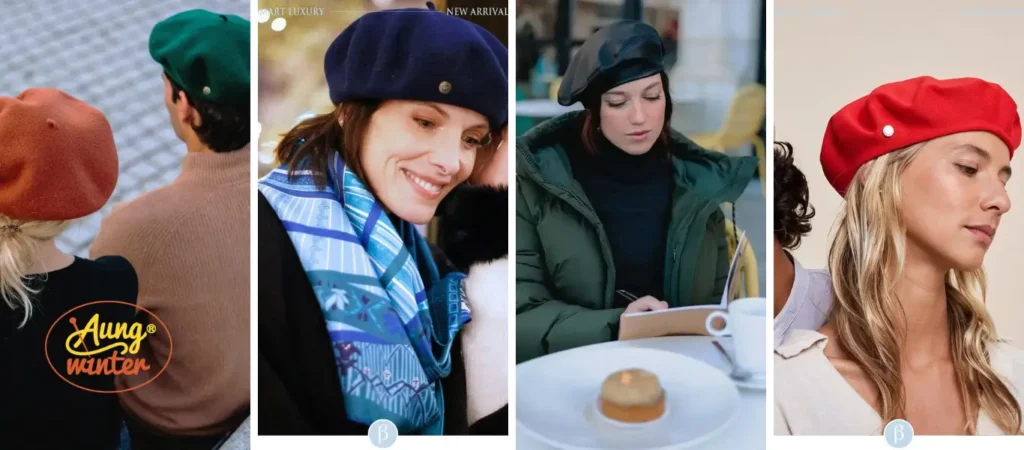
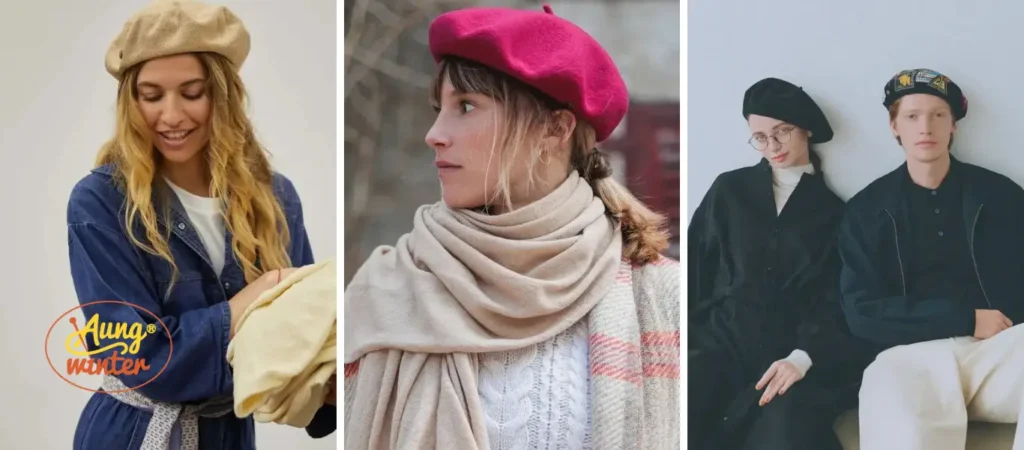
In the fall and winter seasons, layering garments easily makes styling dull. That’s when a piece that offers both warmth and character becomes especially crucial. “I believe all people know that a proper hat can play a soul-based role in the winter styling”. With the same outfits, adding a piece of a hat can easily stand out in the crowd, which is the fact that most people ignore – hats are not simple accessories, and they are the highlighting spots of the whole styling.
As a custom manufacturer of winter hats and apparel, we (Aungwinter) focus on how different brands integrate craftsmanship, culture, and commerce to identify patterns we can study and learn from. During our daily work, we need to face so many requirements, including customization for enterprises, teams, and brand collaborations. All these have the same logic that China has the production capacity, lacking the ability to make product heritage culture and crafts narratives. For this, LAULHÈRE – a French century‑old brand hailed by countless media outlets as “the Hermès of berets”- offers us an excellent research model.
What follows, from a practitioner’s perspective, is an overview of LAULHÈRE’s nearly 200‑year journey from the Pyrenees valley to the global fashion stage, along with industry observations on what this classic brand reveals about today’s wave of customization.

LAULHÈRE’s 6 key stages of evolution.
The Shepherd’s Practical Wisdom – The Prehistory of the Beret (From the 15th Century Onward)
To completely understand LAULHÈRE, we must first start with the origins of the beret.
The beret dates back to the 15th century in the Pyrenees, France. About the origin of the beret, here is a well-known story that local shepherds spun brown wool into a round, brimless soft cap, which protected them from wind and rain, wiping sweat when taking the cap off, and placed it on the ground to use as a cushion. This simple, functional design was the distilled wisdom of working people honed through daily life.
Later, the Basque people, living on the border between France and Spain, began wearing this hat, which came to be known as the “Basque beret” (Béret Basque). Originally, everyday attire for mountain dwellers, it was adopted in the 19th century as the standard headgear for the French Army’s mountain units. The reasons: its soft, brimless design avoided snagging, it fit snugly against the head, and it wouldn’t fall off while running. This turning point took the beret from a “shepherd’s cloth cap” into the realm of national military equipment — and opened the door to a much wider world.
Pierre Laulhère Sows the Seeds – The Artisan DNA of a Wool Merchant (1792–1840)
The story of LAULHÈRE begins in 1792. Pierre Laulhère created a wool and cotton weaving mill in Oloron-Sainte-Marie, in southwestern France. This date is earlier than the more commonly known year of 1840; in 1838, his son, Lucien Laulhère, took over the management of the business.
Pierre was a visionary entrepreneur. He personally travelled to Spain to select the finest merino wool – renowned for its softness and quality – laying the foundation for LAULHÈRE’s quality philosophy of “being picky from the very raw material.” Lucien, in turn, carried on his father’s uncompromising standards and focused on the transmission of craftsmanship, which laid the groundwork for the brand’s artisan system that would span two centuries.
Implication for custom manufacturers: Pierre’s personal vision – hands‑on, uncompromising commitment to raw materials – is a cornerstone that is easily overlooked in today’s wave of customization. Many custom brands chase “quick response” and “low cost,” often at the expense of quality control that starts at the raw material stage. But a manufacturer that truly wants to build brand value must treat raw material control as an unrelenting, long‑term battle – not as a “black box” passed off to the next link in the supply chain.
The Birth of the Beret – How a Marriage Preserved a Craft (1840)
The year 1840 was a meaningful milestone in LAULHÈRE’s history. That year, Lucien married Marie Tournaben, whose family had been making berets since 1810. Through this marriage, LAULHÈRE acquired the Tournaben family’s generations of hat-making expertise – the essence of a series of processes, including knitting, fulling, felting, dyeing, shaping, and more began to be passed down through the enterprise from generation to generation.
It was from this period onward that LAULHÈRE officially became a specialist beret manufacturer, laying the foundation for two centuries of craftsmanship refinement. In the decades that followed, LAULHÈRE established a new workshop along the banks of the Gave River in Oloron-Sainte-Marie – a location it has never moved from to this day. The Gave River, with its unique mineral composition, became the “secret weapon” of LAULHÈRE’s fulling process – it is precisely this distinctive river water that gives LAULHÈRE berets their one-of-a-kind, irreproducible handfeel.
Implication for custom manufacturers: This detail is deeply moving and well worth pondering. A brand’s irreplaceability sometimes comes from the very land it is rooted in. LAULHÈRE’s uniqueness is not just because of its inherited craftsmanship, but also because it relies on the specific natural environment of its region – the special water quality of the river, the wool-producing areas of the Pyrenees. This reminds us that the construction of brand distinctiveness can start with the geographical and ecological uniqueness of raw materials themselves. Custom manufacturers can help clients discover regionally distinctive materials – for example, choosing wool from specific mountain regions, or incorporating local dyeing techniques into the design, thereby endowing the brand with cultural value rooted in geographical identity.
Survival Through Turmoil – The Last Authentic Beret Manufacturer in France (1970s–2010s)
Entering the latter half of the 20th century, the waves of globalization and low‑cost production dealt a heavy blow to France’s domestic manufacturing industry. Cheap imitations from Asia, Eastern Europe, and other regions flooded the market. Coupled with the sharp decline in military beret orders following the abolition of mandatory military service in France in 2001, the French beret manufacturing industry suffered a devastating blow.
30 Years ago, there were 22 beret factories in the Oloron‑Sainte‑Marie area alone. But by the 2010, that number had plummeted to just 2 factories: LAULHÈRE and Blancq‑Olibet. Shortly afterwards, LAULHÈRE acquired its only competitor – a brand with nearly 200 years of history – becoming the last factory in France still producing traditional berets.
2012 marked a turning point for LAULHÈRE. On the verge of bankruptcy, the company was acquired by Cargo Holding, and Rosabelle Forzy took over management, intending to bring “made in France” berets to domestic and international markets. Furthermore, LAULHÈRE received the “Entreprise du Patrimoine Vivant” (Living Heritage Company) label in 2012 – a distinction that recognized its outstanding commitment to preserving French artisanal excellence. In 2013, the label was officially renewed, confirming LAULHÈRE’s status as part of the French national cultural heritage.
Implication for custom manufacturers: LAULHÈRE’s path to save itself during the crisis shows us that preserving tradition does not mean standing still. Earning the “Living Heritage” label was not only a retrospective recognition of the past – it was also a promise for the future. Systematizing traditional craftsmanship into a repeatable, transferable heritage creates high commercial value in itself. If custom manufacturers can standardize, codify, and visualize the core processes of hat‑making – letting clients see that “every hat goes through more than 11 steps and is personally checked by skilled craftsmen” – that becomes one of the most powerful forms of brand endorsement.
Modern Transformation – From Military Supplier to the Crossover Peak of Fashion and High-End Customization (2010s to Present)
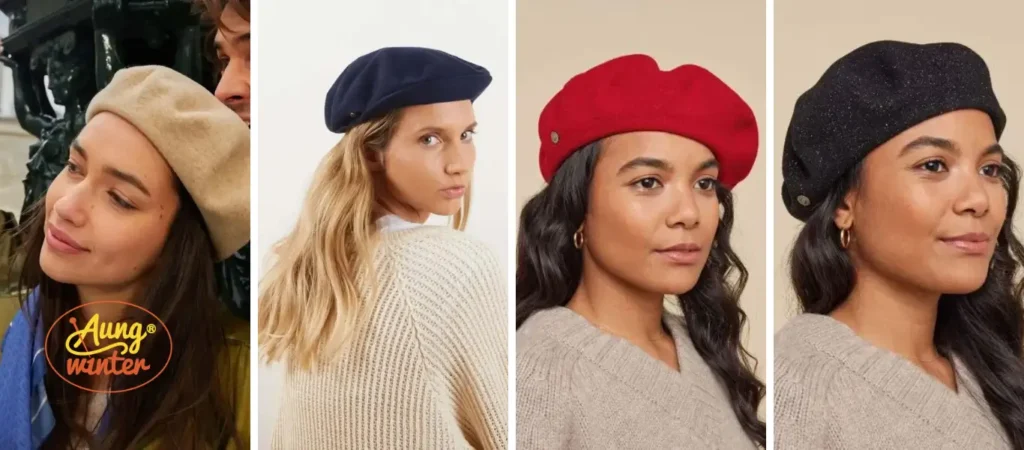
Today, LAULHÈRE enjoys an outstanding reputation worldwide. It is not only an official supplier to the armed forces of multiple countries – including France, Belgium, Norway, and others — but also a partner to some of the most prestigious fashion houses. From Christian Dior to Dolce & Gabbana, John Galliano, Louis Vuitton, and Ralph Lauren – all have collaborated with LAULHÈRE or featured its berets in their own collections.
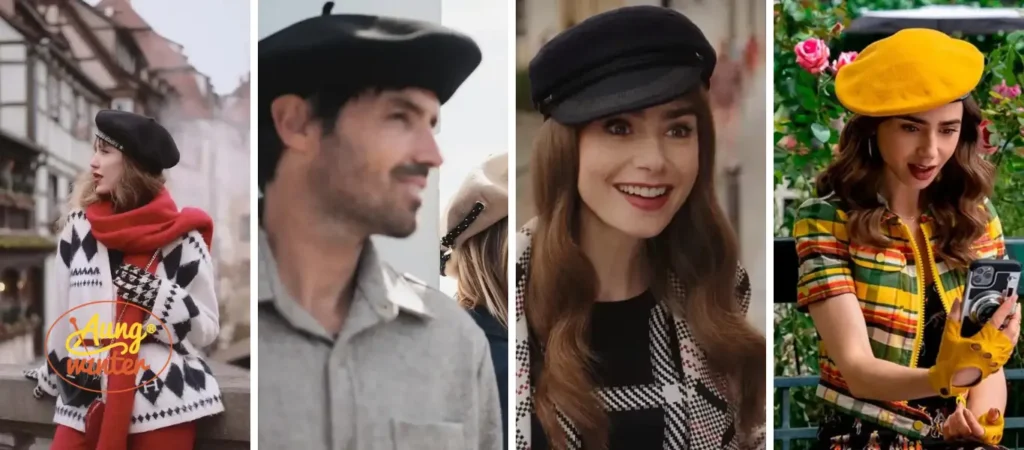
Moreover, LAULHÈRE has become an important symbol in pop culture. Plenities of celebrities have worn LAULHÈRE berets, such as Madonna, Rihanna, Emma Watson, and even Che Guevara. In the hit TV series Emily in Paris, many of the protagonist’s standout looks rely on the accent of a LAULHÈRE beret – instantly bringing that unmistakable French flair to the screen.
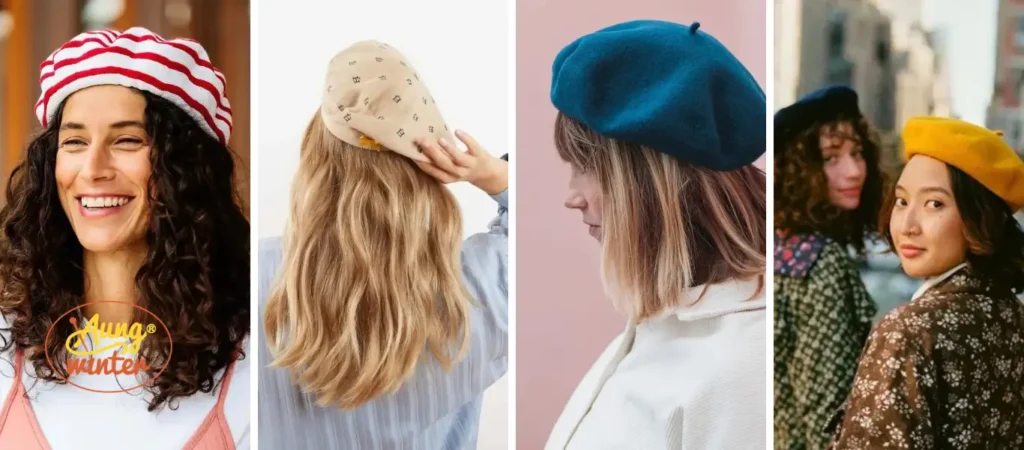
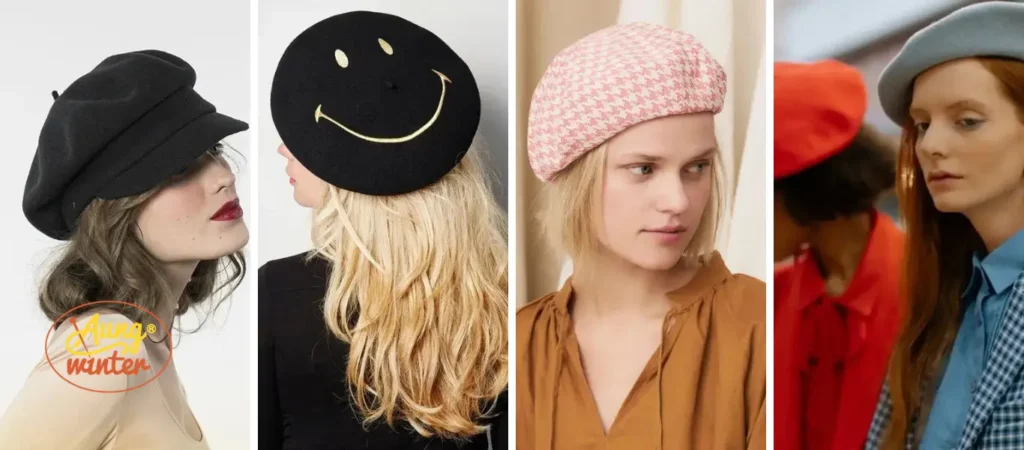
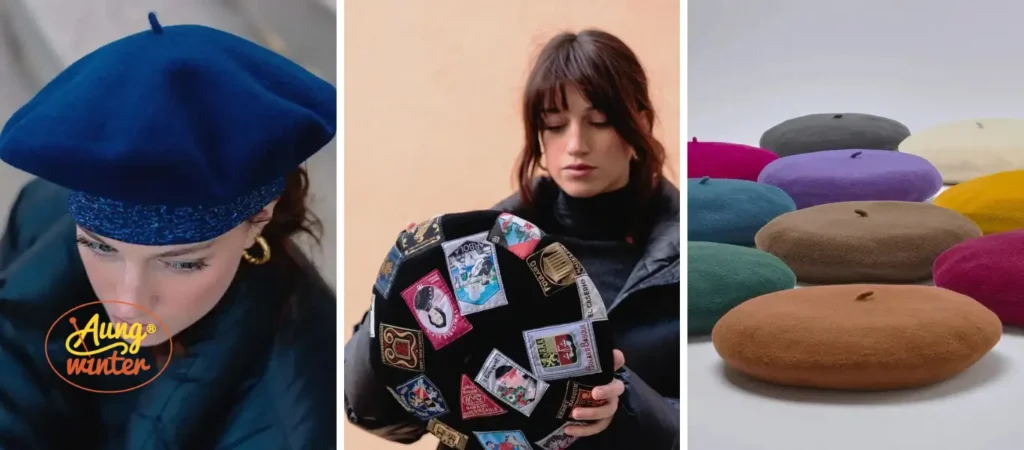
The brand’s product line has also grown increasingly diverse. Beyond the classic Basque beret, LAULHÈRE has expanded into the URSA series of courier-style hats – with a wider brim design that flatters the face and visually lifts the crown of the head. Creative limited‑edition collections such as the houndstooth-patterned beret, smiley‑face version, and badge series have also won over a broad customer base.
On the product category front, LAULHÈRE continues to push boundaries. From classic solid‑colored berets to cotton‑linen summer weights, leather versions, and specialized lines for military and sportswear applications, LAULHÈRE proves through its rich product portfolio that traditional craftsmanship is not being eliminated by fashion – rather, it is gaining new vitality through continuous adaptive innovation. In 2015, LAULHÈRE produced 200,000 berets annually, with a turnover of €2.9 million, which was roughly one-third of that production that was exported to approximately 20 countries, including key markets such as Japan, China, and the United States.
A Commitment to Local Production – Winning Through Uniqueness, Not by Resisting Globalization
In an era where customization is rampant, LAULHÈRE has held to a decision that seems to go against the current: all of its products are made in France, and the factory remains at its original site in Oloron‑Sainte‑Marie to this day.
Whether by selecting high‑quality French merino wool from the Pyrenees or using the mineral‑rich water of the Gave River for fulling, LAULHÈRE conveys a profound message in its own way: a great beret is not just a wearable accessory – it is a narrative rooted in the land and its culture.
Inside LAULHÈRE’s workshop, every beret goes through more than two days of handcrafting and multiple quality inspections – from knitting, re‑knitting, patching, felting, dyeing, shaping, to finishing and trimming. In the age of live‑stream e‑commerce, this level of craftsmanship allows the brand to maintain luxury‑level pricing power and brand loyalty.
Implication for custom manufacturers: LAULHÈRE shows us that “fast” is not everything – “uniqueness” is what wins the race. Amid the current wave of customization, Chinese manufacturers have the resources and capability to deliver fast, batch‑production responses. But to break into the high‑end custom market, they must become “irreplaceable” in at least one dimension – whether that be region‑specific raw materials, proprietary dyeing techniques, or a quality control system woven through the entire supply chain. Brand premium ultimately comes from “what others can’t do” – not simply “how fast we can do it.”
Observations and Reflections from a Custom Manufacturer
From the perspective of a winter hat custom manufacturer, LAULHÈRE’s story provokes a few deeper reflections of my own.
First, the commercial transformation of traditional craftsmanship. When LAULHÈRE was on the verge of bankruptcy, the acquisition by Cargo Holding did more than inject capital – it provided a management framework for brand building and commercial upgrading, which reminds us that traditional craftsmanship needs to find a point of connection with modern commercial systems in order to achieve sustainable growth. For domestic custom manufacturers, the tension between artisanal heritage and production scale is a persistent challenge for them. LAULHÈRE has effectively balanced the price sensitivity and quality expectations of different customer segments by tiering its products (classic collection, military collection, haute couture). This is a strategy well worth learning from.
Second, the effective construction of a brand story. LAULHÈRE sticks in consumers’ minds not just as “a good hat,” but as “a French beret with nearly 200 years of history and a Living Heritage label.” This depth of history and emotional resonance is precisely what many Chinese brands lack in their narrative building. We should not only admire LAULHÈRE’s skill and raw materials – we should also learn how it turns every part of its process into a shareable story: the Gave River, Pyrenees wool, military orders, fashion shows. That complete narrative chain, from soil to brand, is a core asset in building a brand moat.
Third, lessons and segmentation in the custom market. In recent years, China’s custom winter hat market has evolved from being purely function‑driven to being driven by the triad of “function + aesthetics + brand expression.” LAULHÈRE produces 200,000 berets annually, of which military berets account for 30%, classic berets for 35%, and haute couture for the remainder. This very clear product structure provides a useful reference for Chinese custom manufacturers: make quality your functional products, make stories your profit products, and make culture your brand products.
At the same time, Gen Z is becoming the dominant consumer force, contributing more than 65% of hat‑related search traffic – and their preferences lean toward expressing individuality and aesthetics. LAULHÈRE has been quite successful in tapping into the emotional resonance of this younger generation through collaborations with street artist KASHINK, its smiley‑face beret, and playful expression styles. This shows that even a brand with nearly two centuries of history is constantly adapting in the face of customization and younger‑consumer trends.
A Hat‘s “Self‑Cultivation” – A Century‑Long Lesson for Made in China
Looking back at LAULHÈRE’s nearly 200‑year journey from the Pyrenees valley to the global fashion stage, what moves us most may not be the brand’s repeated resilience in the face of hardship, but its unyielding reverence and love for the craft of making a great hat.
From Pierre crossing borders to select the finest merino wool, to Lucien actively acquiring the Tournaben family’s hat‑making expertise through marriage, to generations of artisans steadfastly upholding more than eleven handcrafted steps day after day – every choice LAULHÈRE made illustrates a simple truth: genuine quality requires the sedimentation of time, and a true brand is built on land and culture.
As participants in China’s winter hat custom manufacturing industry, we have production capacity, quick‑response capabilities, and mature, efficient supply chain networks – undeniable strengths. But more importantly, we should draw inspiration from LAULHÈRE’s story, learning how to infuse deeper cultural narratives into our products and how to shape intrinsic brand value through time and craftsmanship.
Therefore, a great hat is never just an accessory that is worn on our head. It carries the heritage of history, the warmth of craftsmanship, and the unique identity of each person who wears it. Perhaps that is the most valuable lesson we can learn from LAULHÈRE’s two‑century journey.
In‑Depth Answers to Three Common Questions
Answer: Yes, LAULHÈRE is currently the only historic traditional beret manufacturer still operating in France, and it represents 100% pure French manufacturing. However, this does not mean that other countries cannot produce berets of comparable quality.
LAULHÈRE’s core advantage is not some “absolute technical barrier” that is impossible to replicate. Rather, it lies in nearly two centuries of accumulated process experience, the original advantage of Belgian wool, the subtle influence of the Gave River’s water quality during the fulling process, and the national cultural endorsement embodied by the “Living Heritage Company” certification. It is precisely these factors – difficult to replicate by time and geography – that form the key elements of LAULHÈRE’s brand moat.
For Chinese custom manufacturers, competing with LAULHÈRE on its original‑location brand premium is neither realistic nor necessary. A more feasible path is to explore China’s own high‑quality wool‑producing regions and use locally rooted craftsmanship stories to build your own brand narrative. For example, the wool from some high‑altitude regions in China is no less competitive than European producing regions. By systematically integrating the characteristics of these raw materials and the cultural context of their origins into your brand story, you can absolutely construct a unique brand identity of your own.
Answer: The LAULHÈRE case provides buyers with a great evaluation template. Specifically, you can assess potential manufacturers from the following four dimensions:
1. Raw material control capability: Does the manufacturer have a stable, high‑quality wool supply system? Is the sourcing of yarns traceable? LAULHÈRE established a tradition of personally overseeing raw materials from the Pierre era. Buyers can apply this same logic to evaluate whether a manufacturer has a long‑term quality control system on the material side.
2. Process transparency: LAULHÈRE follows more than 11 production steps, each manually controlled by skilled artisans. Buyers can request complete sample development records and quality control documentation to understand a manufacturer’s technical parameters and craftsmanship level. In terms of sampling speed, leading manufacturers in the industry have already achieved 7‑day sampling and 12‑day mass production turnaround.
3. Customization service capability: Can the manufacturer handle small‑batch customization (e.g., trial orders of 30–50 pieces)? Does it offer flexible brand collaboration and design translation services? These factors directly affect a brand’s market trial costs. In recent years, the minimum order quantity for custom winter hats has been steadily decreasing – some manufacturers now accept orders as low as 50 pieces or even 25 pieces with a quick‑response model, significantly lowering the entry barrier for brands.
4. Final product quality and delivery capability: Evaluate whether the manufacturer has a sound quality control system, holds basic certifications such as ISO 9001, and has positive client feedback from past projects. On‑time delivery rate is a key indicator – if a manufacturer achieves a punctuality rate above 95%, it demonstrates a high level of production planning and execution capability.
Answer: This is a very important question. From our (Aungwinter’s) perspective as an industry practitioner, focusing on and studying LAULHÈRE at this moment is based on the following observations: