Bienvenue pour nous contacter
Garantie de réponse en 24 heures | Commande minimum à partir de 50 pièces
🔒 100% : confidentialité garantie. Aucun spam, c'est promis.

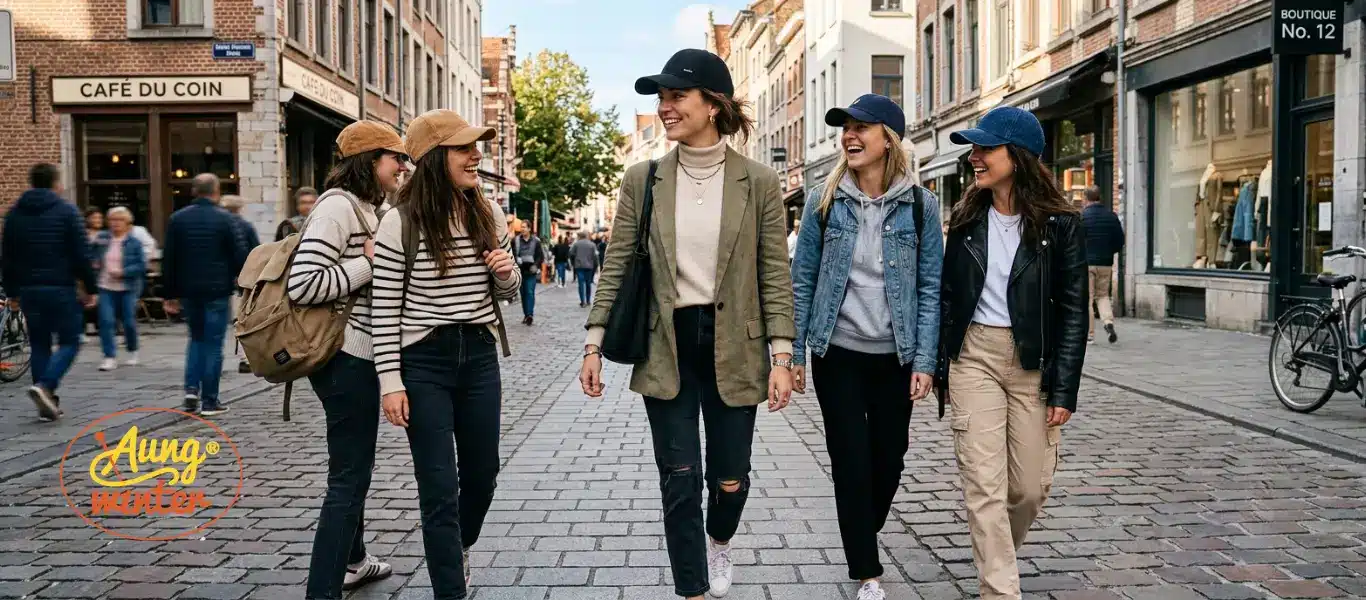
Après plusieurs mois, l'hiver s'apprête à arriver, et les bonnets deviendront rapidement un indispensable de la garde-robe. Cependant, avez-vous déjà eu cette expérience où il va parfaitement au mannequin, mais quand vous l'essayez vous-même, il donne un air plus rond à votre visage, vous fait paraître plus petite, serre trop la tête, ou s'envole tout simplement au premier coup de vent ?
En tant que un fabricant avec plus de 28 ans d'expérience dans les bonnets personnalisés depuis 1998, nous (Aungwinter) interagissons avec des milliers de consommateurs chaque jour et avons vu de nombreux achats de “chapeau inapproprié”. La vérité est que choisir le bon chapeau peut être aussi compliqué ou aussi simple que vous le souhaitez. Une fois que vous comprenez les cinq dimensions clés : forme du visage, tour de tête, matière, cas d'utilisation et couleur – n'importe qui peut trouver ce chapeau d'hiver qui rendra son visage instantanément plus fin.
Aujourd'hui, chez Aungwinter, nous décortiquons la science qui se cache derrière la façon de choisir le bonnet d'hiver parfait, directement depuis notre chaîne de production.
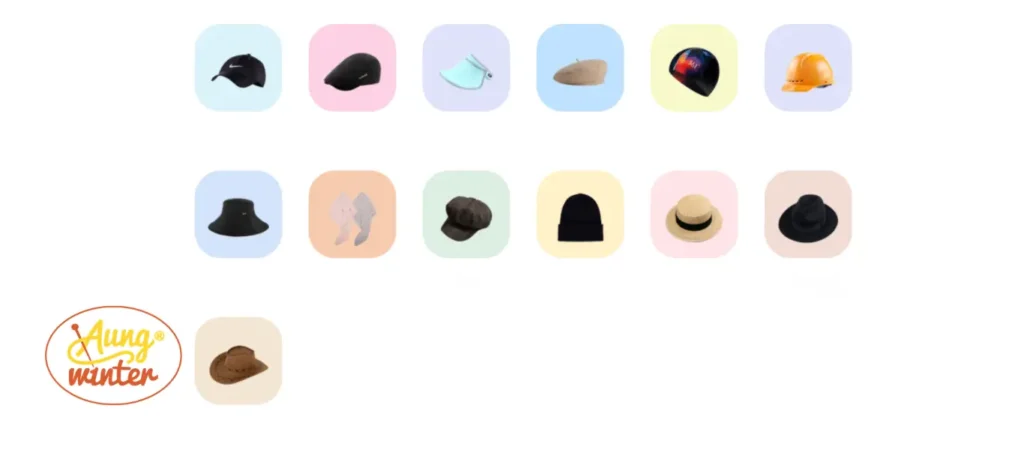
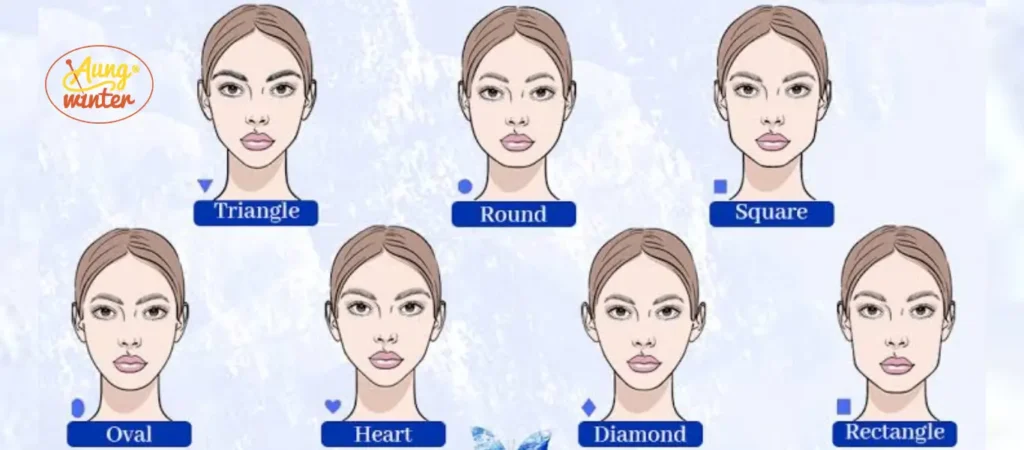
La règle d'or pour choisir un chapeau est qu'il ne doit pas cacher votre visage, mais le rééquilibrer. La logique est très simple : les visages ronds bénéficient de lignes angulaires pour casser la rondeur, les visages carrés bénéficient de silhouettes courbées pour adoucir la mâchoire, et les visages longs bénéficient d'un bord qui raccourcit visuellement le visage.
Caractéristiques : Rond et dodu joues, avec une proportion de 1:1 entre la longueur et la largeur du visage.
Avide chapeaux: Les chapeaux en forme de dôme qui épousent le cuir chevelu, comme les casquettes de marin, ou les bérets plats et non structurés qui suivent la rondeur de votre visage et le font paraître encore plus large.
Convenable styles de chapeaux : Casquettes de baseball (l'auvent anguleux tranche la rondeur), chapeaux Panama et bérets (portez-les de travers pour casser la symétrie).
Recommandation personnalisée : Si vous avez un visage rond, privilégiez les casquettes de baseball à bord arrondi ou les casquettes gavroches structurées pour votre commande personnalisée de chapeaux d'hiver. Plus le bord est net, plus l'effet amincissant est marqué.
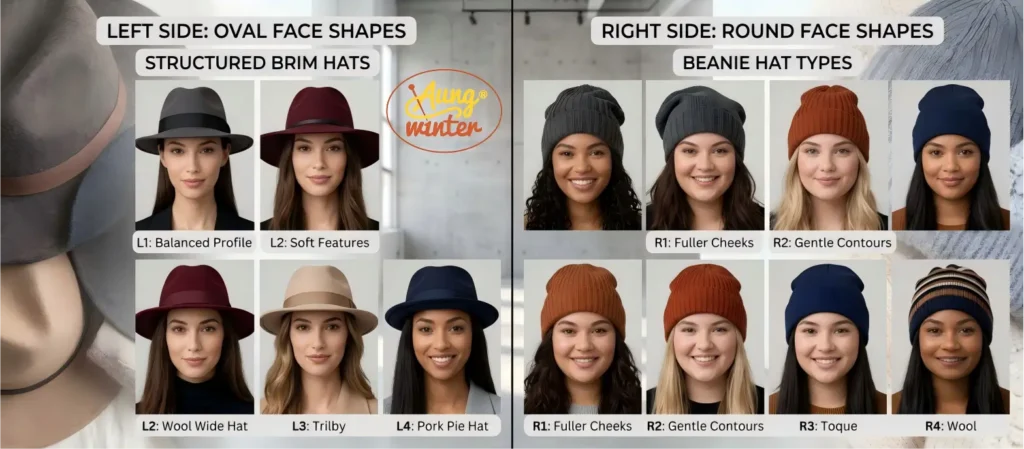
Caractéristiques : Proportions équilibrées, lignes du visage douces.
Que porter : Presque tous les styles de chapeaux conviennent, il n'y a pas vraiment de zone à éviter, ce qui signifie que nous encourageons toujours les personnes ayant un visage ovale à expérimenter différents styles lors de la personnalisation. En effet, il y a une différence significative entre “ ça va ” et “ ça a l'air exceptionnel ”.”
Caractéristiques : Mâchoire forte et définie.
Ce qu'il faut éviter : Les chapeaux rigides à dessus plat n'accentuent que l'angularité que vous avez déjà, vous faisant paraître encore plus “carré”.”
Meilleurs styles de chapeaux : Bonnets souples (la couronne arrondie adoucit la mâchoire), cloches et bérets.
Recommandation personnalisée : Pour les visages carrés, optez pour des chapeaux en feutre de laine à couronne ronde ou des bérets en laine souple. Choisissez des tissus doux et souples, évitez les chapeaux rigides et structurés.
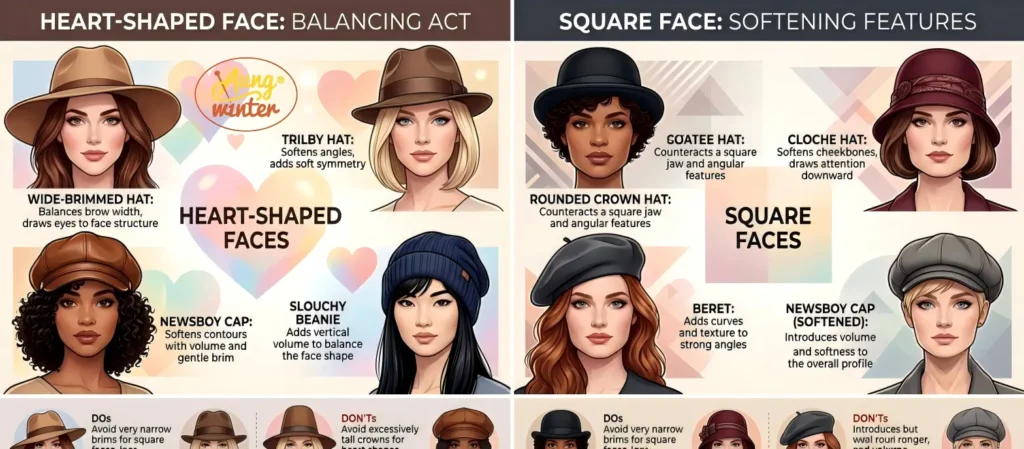
Caractéristiques : Front large, menton pointu.
Meilleurs styles de chapeaux : Casquettes plates, chapeaux seau à bord moyen et chapeaux à large bord. Éviter les styles avec des bords trop étroits ou peu profonds.
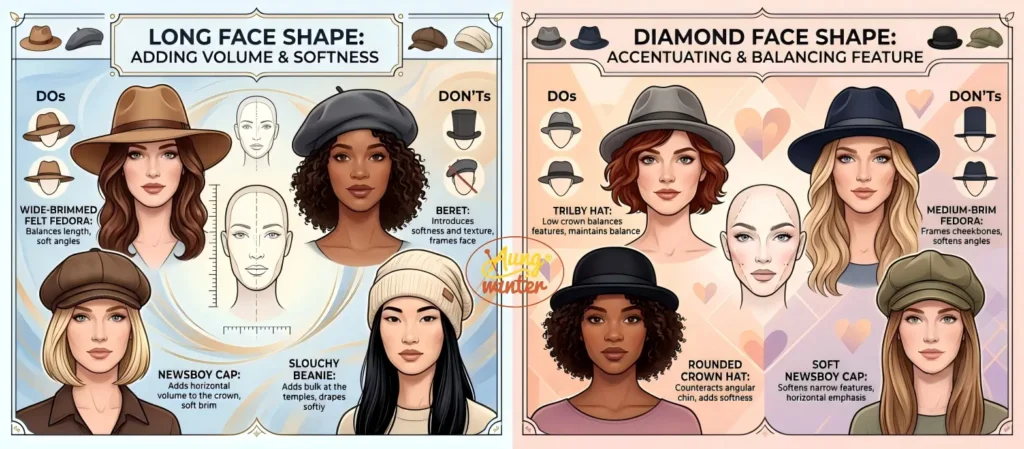
Caractéristiques : La distance entre le front et le menton est nettement plus longue que la moyenne.
Ce qu'il faut éviter : Les couronnes hautes et les coiffures à haf-lift donnent l'impression d'allonger encore plus votre visage.
Meilleurs styles de chapeaux : Chapeaux seaux (portés baissés), casquettes gavroches et casquettes de baseball.
Recommandation personnaliséerecommandation : Pour les visages longs, les styles à larges bords et à calotte peu profonde sont les plus flatteurs. Portez un chapeau cloche bas sur votre front pour raccourcir visuellement le visage. Lors de la personnalisation, recherchez des chapeaux à calotte peu profonde avec une profondeur de calotte inférieure à 12 cm.
Caractéristiques : Chaque saillante avec un front et un menton étroits.
Meilleurs styles de chapeaux : Bérets portés avec une bonne couverture sur le front ; et chapeaux seau avec un sommet arrondi.
Quelle que soit la forme de votre visage, il existe une règle mesurable pour le faire paraître plus petit : le bord de votre chapeau doit dépasser d'au moins 1 à 2 cm du point le plus large de vos pommettes. Cette couverture visuelle contribue davantage à affiner le visage que n'importe quel style de chapeau spécifique. En bref, plus le bord est large, plus le visage paraît petit.
| Formes de visage | Caractéristiques | Chapeaux recommandés | Éviter les chapeaux |
| Visage rond | Vérification de l'arrondi avec une proportion étroite de 1:1 entre la longueur et la largeur du visage. | Casquettes de baseball Chapeaux Pamana Bérets (portez-les inclinés pour briser la symétrie) | Chapeaux en forme de dôme tels que les casquettes de marin ou les bérets plats et non structurés |
| Visage carré | Mâchoire forte et définie | Coupe arrondie, chapeaux seau souples Chapeaux cloches Bérets | Coupe au carré, casques de chantier (peuvent renforcer une mâchoire prononcée) |
| Visage long | Une assez longue distance du front au menton | Chapeaux seau Casquettes gavroche Casquettes de baseball | Des couronnes hautes et des styles à dessus montants, ils allongent encore plus votre visage |
| Cœur–Visage modelé | Front large et menton pointu | Chapeaux plats Chapeaux seau mi-hauteur Chapeaux à larges bords | Chapeaux à bords trop étroits ou à calotte trop légère |
| Diamant–Visage modelé | Pommettes pointues, menton étroit et front | Bérets Chapeaux seau à dessus arrondi | Chapeaux à bords trop étroits |
| Visage ovale | Un visage aux formes harmonieuses avec des traits doux | Convient à presque tous les types de chapeaux | Presque pas |
C'est l'étape la plus négligée et pourtant la plus cruciale lors de l'achat d'un chapeau. De nombreux consommateurs se plaignent que “les chapeaux taille unique sont inconfortables”, et le plus souvent, ce n'est pas parce qu'ils ont une taille de tête inhabituelle, mais parce qu'ils n'ont jamais mesuré leur tête.
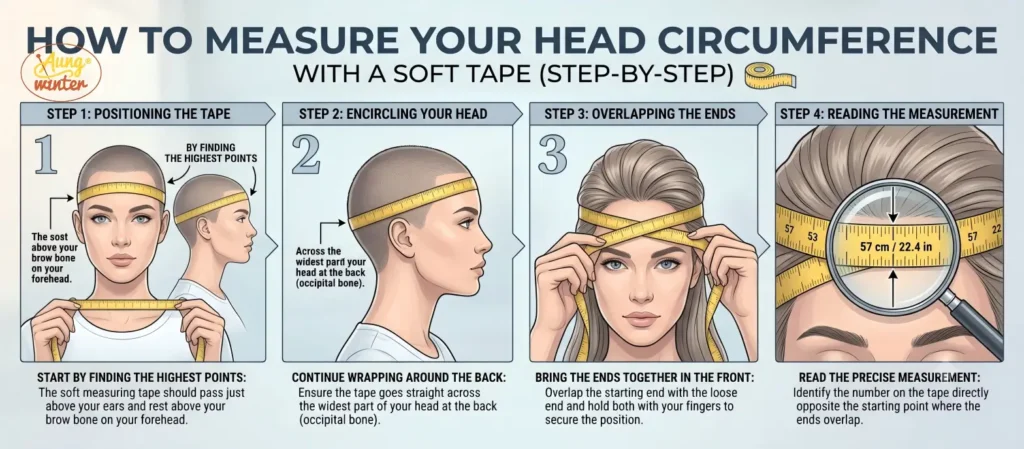
Prenez un mètre ruban souple ou un morceau de ficelle, et enroulez-le autour de votre tête en commençant environ 1 cm au-dessus de vos sourcils, en passant par le point le plus saillant à l'arrière de votre crâne. Cette mesure est la circonférence de votre tête.
Voici trois points clés à garder à l'esprit :
| Taille de la tête | Tailles de chapeau appropriées | Conseils de sélection |
| Tour de tête standard 56-58 cm | Chapeaux de taille unique sur le marché, choisis selon les préférences personnelles | Faites attention à la profondeur de la couronne |
| Grande circonférence crânienne Plus de 58 cm/22,83 pouces | Chapeaux seau larges Bérets ajustables Bonnets rebondissants | Recherche “ chapeau à grande tête ” Choisir une fermeture réglableBonnet en maille épaisse |
| Petite circonférence crânienne Moins de 54 cm/21,26 pouces | Bérets Casquettes gavroche Chapeaux pour enfants de grande taille | Recherche “ chapeau à petite tête ” Ajuster la fermeture à la tension souhaitée Choisir des bonnets en maille fine |
En tant que fabricant sur mesure, nous entendons souvent nos clients dire : “ Le tour de ma tête n'est pas large, mais les chapeaux me serrent toujours. ” Le problème réside souvent dans l'adéquation entre le tour de tête et la profondeur de la couronne. Même si le tour de tête est bon, si la couronne n'est pas assez profonde, le chapeau ne sera pas bien ajusté et restera inconfortable.
Lors d'une commande personnalisée, nous recommandons à nos clients de fournir à la fois la circonférence de la tête et la mesure du haut de l'oreille au sommet de la tête. Ce détail supplémentaire fait toute la différence entre un chapeau qui va et un chapeau qui est parfaitement ajusté.
En hiver, la matière du bonnet détermine tout, comme la chaleur, le confort, la durabilité et même sa capacité à conserver sa forme. Tout dépend de sa composition.
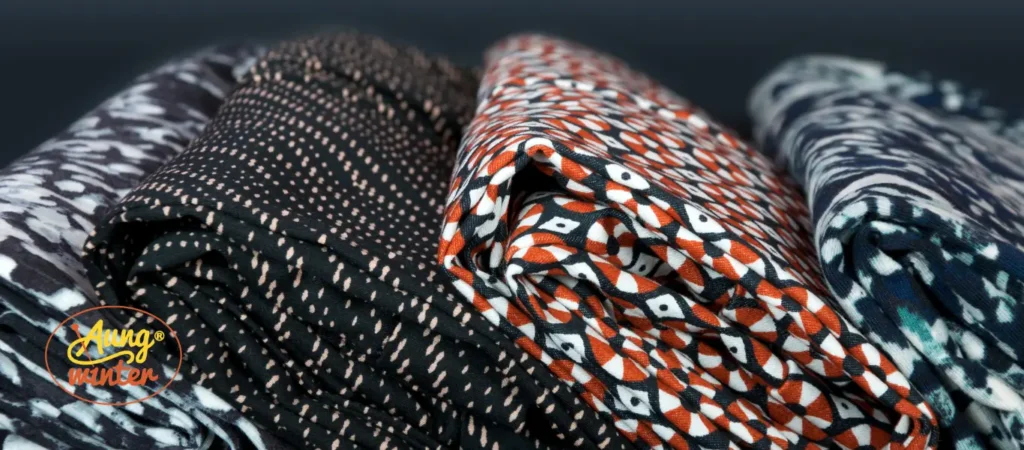
Laine : Le cheval de bataille des couvre-chefs d'hiver. Sa grande isolation et son excellente respirabilité vous gardent au chaud et à l'aise même après des heures de port. Classement de chaleur : Laine > Acrylique > Mélanges. Veuillez vérifier l'étiquette de composition. Plus le pourcentage de laine est élevé, plus le bonnet est chaud.
| Scénario | Matériel recommandé |
| Trajet quotidien | Laine mélangée, le juste milieu entre chaleur et rapport qualité-prix. |
| Froid extrême/en plein air | Doublure en polaire ou bonnets style peau de mouton. |
| Qualité supérieure | Laine ou cachemire à haut pourcentage. |
| Peau sensible | Privilégiez les fibres naturelles ; évitez les synthétiques purs. |
Un conseil de style rapide
Les bonnets épais et tricotés grossièrement sont plus indulgents et plus faciles à ajuster que les bonnets en tricot fin. Si vous avez un visage plus rond ou un tour de tête plus important, un bonnet épais sera beaucoup plus flatteur et confortable qu'un bonnet en tricot fin.
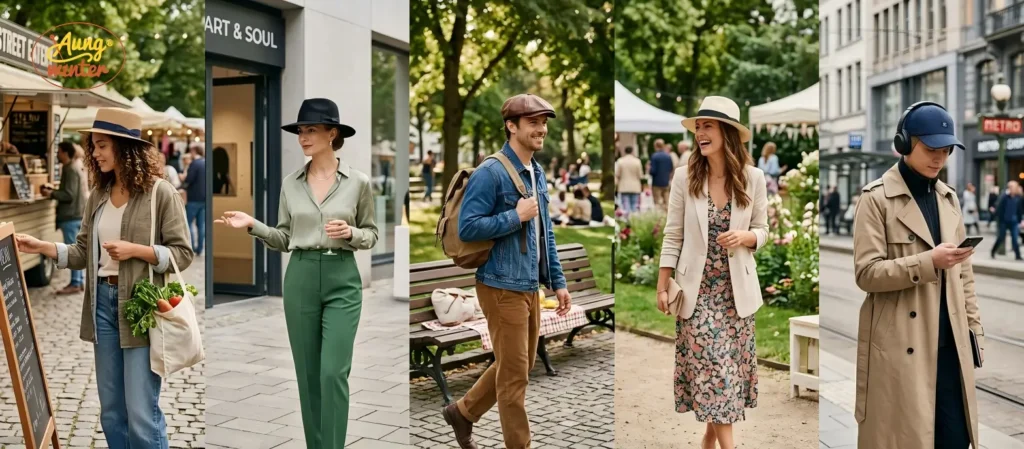
Dans l'industrie de la mode, un même chapeau peut avoir un look complètement différent selon le contexte. Par conséquent, choisir un chapeau ne se résume pas à son apparence, mais à la manière dont il correspond au moment.
Haux styles : Casquettes de baseball à visière incurvée, bob de couleur unie simple.
Couleurs: Noir, blanc, bleu marine, beige, tous sont épurés, minimalistes et s'accordent avec n'importe quelle garde-robe de trajet.
Personnalisé suggestions: Dans cette scène, les bonnets d'hiver personnalisés offrent une opportunité de branding subtile mais soignée. Un logo d'entreprise ou un identifiant personnel peut être brodé avec goût sur le côté ou à l'arrière, un discret mais indubitable signe de votre identité.
Haux styles : Bérets en laine et chapeaux en feutre de laine à larges bords.
Palette de couleurs : Bourgogne, camel, vert forêt, crème, vintage, raffiné et sans effort parisien.
Le béret est l'un des styles les plus populaires dans l'espace des customisations. Portez-le incliné pour adoucir le front; portez-le bas pour un look plus enveloppant et qui encadre le visage. Il est remarquablement flatteur sur presque toutes les formes de visage.
Meilleurs styles de chapeaux : Casquettes de gavroche, casquettes de peintre, chapeaux cloche.
Palette de couleurs : Kaki, avoine, gris clair, carreaux simples, doux, apaisants et discrètement artistiques.
La casquette gavroche dégage un charme vintage et littéraire naturel. La visière et les panneaux latéraux offrent un espace idéal pour les détails de marque ; parfait pour les labels et les individus cherchant à adopter une ambiance rétro et cultivée.
Meilleurs styles de chapeaux : Casquettes de baseball à visière plate, bonnets unis, casquettes à logo brodé.
Palette de couleurs : Noir uni, contraste noir et blanc, accents néon, logos personnels audacieux.
C'est l'une des catégories de personnalisation les plus demandées. De plus, les jeunes consommateurs n'achètent pas seulement un bonnet, mais ils achètent une déclaration portable. Il ne s'agit pas seulement de se tenir chaud, mais d'exprimer une attitude.
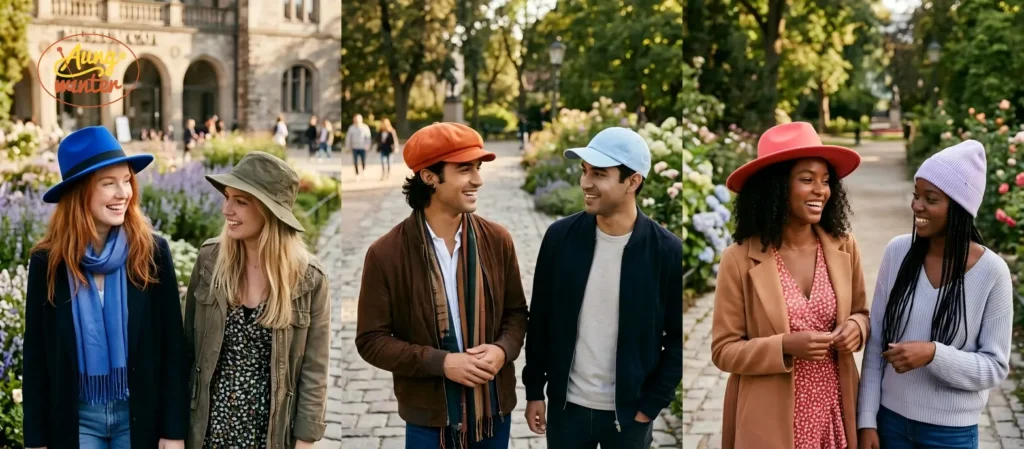
Choisissez la bonne couleur, et un chapeau ne fait pas que flatter votre visage, il peut réellement faire rayonner votre peau.
| Teint | Meilleures teintes | Pourquoi |
| ChaudyBonjour teint | Chameau, kaki, bordeaux, caramel | Illumine le teint et ajoute de la chaleur |
| Cool/juste teint | Noir, marine, gris, tons sourds désaturés | Crée un contraste net et raffiné qui se démarque |
Bord sombre + calotte claire, ce contraste donne l'impression que votre visage paraît plus petit devant la calotte plus claire, tandis que le bord plus sombre affine visuellement la largeur de votre visage. C'est une combinaison de couleurs presque infaillible pour la plupart des formes de visage et l'un des choix les plus sûrs et les plus efficaces lors de la personnalisation.
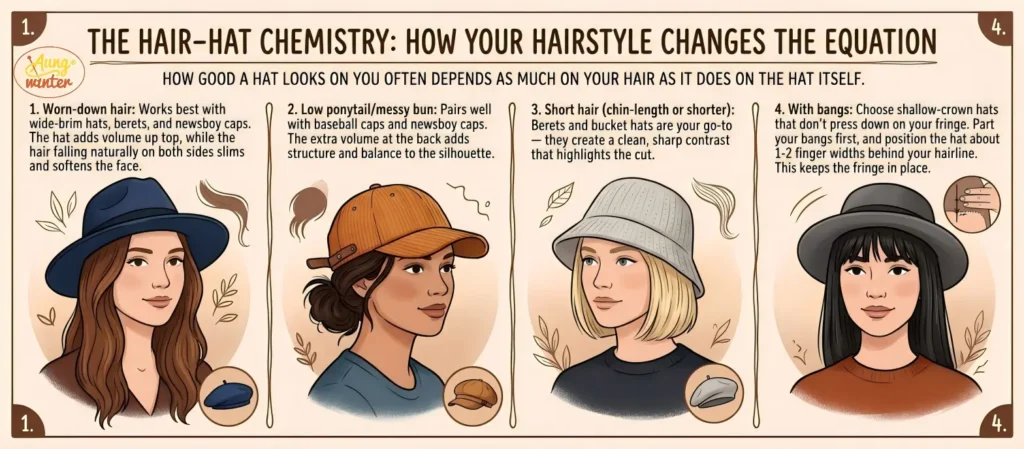
La beauté d'un chapeau sur vous dépend souvent autant de vos cheveux que du chapeau lui-même.
Nous fabriquons des chapeaux tous les jours, nous savons donc exactement où le shopping de chapeaux en ligne peut mal tourner. Voici nos conseils éprouvés et sans fioritures pour les consommateurs :
1. Vérifiez toujours les données du périmètre crânien.
De nombreuses marques ont des systèmes de tailles incohérents. Veuillez toujours consulter la plage de circonférence de tête réelle dans la description du produit et la faire correspondre à votre propre mesure. Si vous avez une tête plus large, évitez les modèles de taille unique qui n’offrent pas d’ajustement ; ils seront serrés et inconfortables.
2. Portez une attention particulière à la profondeur de la couronne.
Lorsque la profondeur de la couronne est inférieure à 12 cm/4,72 pouces, c'est un chapeau à couronne peu profonde ; plus de 14 cm/5,51 pouces est un style à couronne profonde. Si la page du produit n'indique pas la profondeur de la couronne, envoyez un message au vendeur pour le lui demander. Ne supposez pas.
La largeur du bord détermine l'effet amincissant.
Si vous souhaitez un chapeau qui affine votre visage, la largeur du bord doit dépasser vos pommettes d'au moins 1 à 2 cm. C'est un guide mesurable et objectif, beaucoup plus fiable que les affirmations vagues de “amincissement” dans les descriptions de produits.
4. Regardez les photos de vrais clients.
Les mannequins ont généralement de petites têtes et des proportions faciales standard. Leurs photos sont donc presque inutiles pour déterminer comment un chapeau vous ira. Au lieu de cela, veuillez consulter les avis clients et rechercher des photos d'acheteurs qui ont une forme de visage et une taille de tête similaires. Cela vous donnera une idée beaucoup plus réaliste de la coupe, de la forme et de l'effet général.
5. L'habitude est la solution ultime.
Si vous avez tout essayé ci-dessus et que vous ne trouvez toujours pas de chapeau qui vous convienne, le sur mesure pourrait être votre meilleure option. En tant que fabricant sur mesure, nous pouvons créer un chapeau à partir de rien, en fonction de la circonférence de votre tête, de la forme de votre visage, de vos couleurs préférées et de l'usage prévu. Plus d'anxiété liée à la taille. Pas d'écart entre “ce que vous voyez” et “ce que vous obtenez”. Chaque pièce est vraiment unique en son genre.
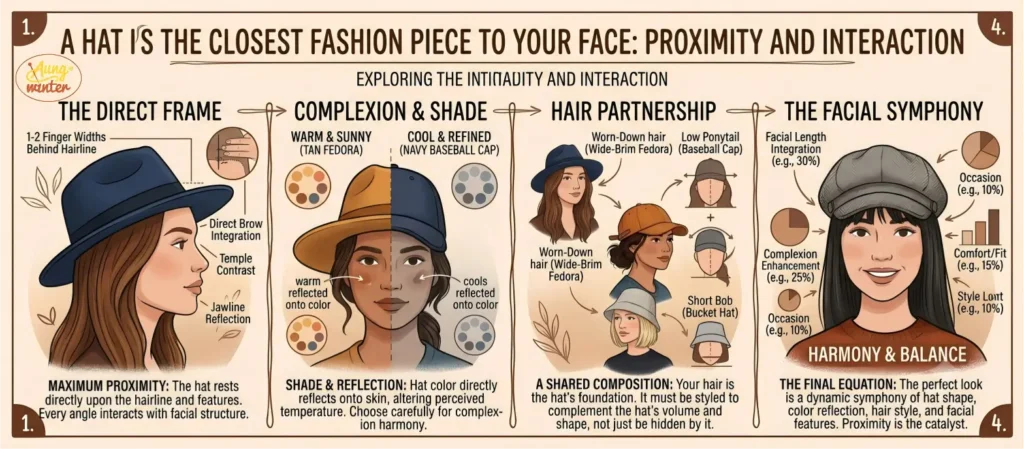
On dit qu'un chapeau est l'accessoire de mode le plus proche de votre visage. Et c'est une belle façon de le voir, car un chapeau ne se résume pas à l'apparence. C'est une question de confort. Et au final, c'est une question de confiance.
Choisissez le bon chapeau et un visage plus petit n'est pas un rêve, c'est une réalité.
En tant que fabricant de bonnets d'hiver personnalisés, notre mission est simple : aider chaque personne à trouver le bonnet parfait – celui où le tour de tête est juste comme il faut, la forme du visage est juste comme il faut, le style est juste comme il faut et la couleur est juste comme il faut.
Nous espérons que cet article vous évitera les tâtonnements et vous aidera à aborder l'hiver qui approche avec un chapeau qui vous va vraiment.
En tant que fabricant professionnel de bonnets et de vêtements d'hiver personnalisés, avec plus de vingt ans d'expérience dans les bonnets d'hiver personnalisés depuis 1998, nous sommes là pour vous accompagner à chaque étape.
De la mesure précise de la tête à la sélection du tissu, en passant par le croquis dessiné à la main et la réalisation de la broderie, nous offrons un accompagnement personnalisé du début à la fin.
Que vous soyez :
Nous pouvons transformer vos idées en réalité avec des prix directs usine et une qualité conçue pour durer.
DM ou ecourriel états-unis avec le tour de tête, la forme de votre visage et votre style préféré, et nous vous enverrons une proposition de style personnalisée et gratuite, comprenant des recommandations de matériaux et une maquette de style.
Ne vous contentez pas d'un “assez bon” cet hiver, et un chapeau qui vous va vraiment n'est qu'à une conversation. Cliquez sur contact en haut pour commencer votre parcours personnalisé.
Votre bonnet d'hiver parfait vous attend. Faisons-en une véritable pièce.
Réponse : Absolument. La combinaison d'un visage rond et d'une tête plus large est l'un des profils les plus difficiles à satisfaire – mais c'est précisément là que la chapellerie sur mesure excelle. Nous adapterons la circonférence du chapeau à votre mesure exacte (59 cm/23,23 pouces) et, compte tenu de la forme ronde de votre visage, nous vous recommanderons des styles à bords angulaires, tels que des casquettes de baseball à bord courbé ou des casquettes gavroche structurées – en utilisant les lignes épurées du bord pour contrebalancer la rondeur de votre visage. Comme matière, nous recommandons des mailles épaisses, plus souples et plus adaptées à la forme de la tête que les mailles fines. Pour la profondeur de la calotte, nous suggérons une profondeur moyenne de 12 à 14 cm/4,72 à 5,51 pouces – assez profonde pour rester bien en place sans être trop haute et élargir votre visage. Avec un chapeau sur mesure, chaque détail – circonférence, profondeur de la calotte et largeur du bord – est construit autour de vos mesures uniques.
Réponse : Il y a trois mesures clés à vérifier :
Et un conseil de plus : ne vous fiez pas aux photos de mannequins. Les mannequins ont généralement des têtes petites et des proportions faciales standardisées – leurs photos sont presque inutiles pour juger de la façon dont un chapeau vous ira réellement. Vérifiez toujours les photos de clients ayant une forme de visage et une taille de tête similaires à la vôtre.
Réponse : En tant que fabricant sur mesure, nous (Aungwinter) demandons généralement à nos clients de fournir ce qui suit :
① Tour de tête (mesuré autour de la tête, environ 1 cm au-dessus des sourcils, passant par le point le plus saillant à l'arrière)
② Forme du visage (rond, carré, long, cœur, diamant ou ovale)
③ Style de chapeau préféré (bonnets, casquettes de baseball, bérets, casquettes de gavroche, chapeaux seaux, etc.)
④ Objectif d'utilisation (trajet quotidien, sports de plein air, cadeau, etc.)
⑤ Préférences de couleur et de matière
⑥ Artisanat du logo (broderie, impression, transfert thermique, marquage, etc.)
Voici le processus dans l'ordre :
Étape 1 : Demande et collecte des exigences
Étape 2 : Proposition de conception et confirmation
Étape 3 : Fabrication et approbation des échantillons
Étape 4 : Production en série
Étape 5 : Contrôle qualité et expédition
En général, le délai de fabrication est compris entre 7 et 21 jours ouvrés, en fonction de la complexité du motif et du volume de la commande. La personnalisation prend certes un peu plus de temps que d'acheter vous-même en ligne ou en magasin, mais en contrepartie, vous obtenez une casquette 100% qui vous appartient en propre, avec une coupe parfaite et un style unique, spécialement conçue pour vous.